

What Excites Us!
Episode 73: Lie Back and Think of England with Jess Wildman
Have you ever caught yourself saying "I shouldn't want that"... and then just... not wanting it anymore? Like you talked yourself out of your own desire before you even let yourself feel it?
Yeah. My guest today has a lot to say about that.
Jess Wildman is a Personal Power Coach based in the UK who helps women shed the weight of societal expectations so they can live delicious lives full of pleasure and joy. Her work is rooted in a simple but radical idea: that personal power begins the moment you stop outsourcing your own desires.
And honestly... this conversation went everywhere.
We talk about shame and how it's constructed on purpose to keep women quiet. We talk about sex and why so many of us are performing instead of feeling. We talk about body image, diet culture, self-trust, and the invisible voices we've invited into our most intimate moments... our pastors, our mothers, our great-grandmothers, and yes, some rich old white man who wanted to sell us something we didn't need.
We also land on the line that stopped me cold: every should is a self-betrayal.
If you've ever said "I'm fine" when you weren't... if you've ever shrunk yourself to make someone else comfortable... if you've ever wondered whose voice is actually running the show in your head... this episode is for you.
A gentle heads up that Jess shares her personal history with disordered eating and diet culture in this episode. Please take care of yourself as you listen.
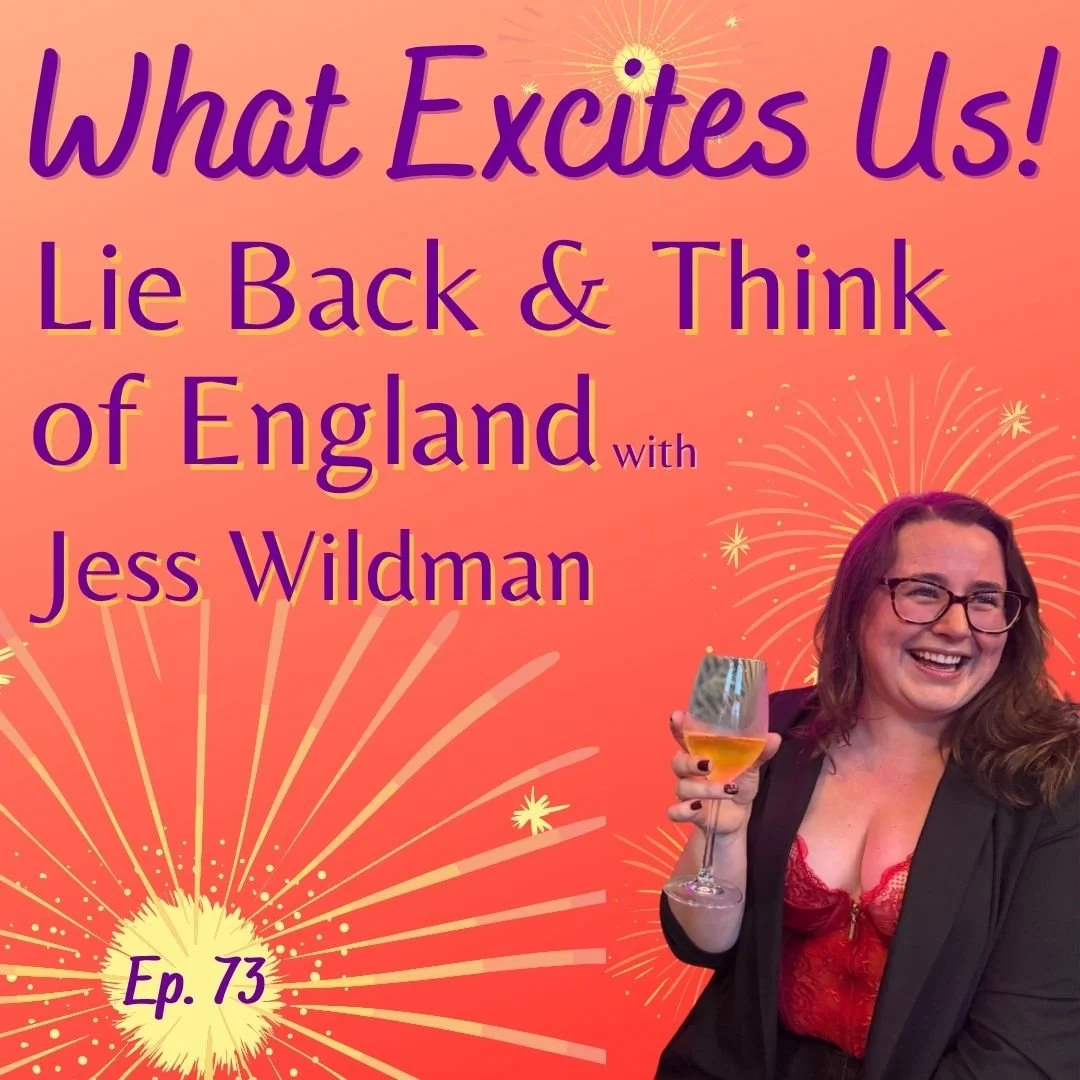
Ep 73: Lie Back and Think od England with Jess Wildman
Jess is a Personal Power Coach.
Her mission is to help women shed the weight of societal expectations (the world ‘should’ makes her want to SCREAM), so that they can live delicious lives full of pleasure and joy.
Jess's work is rooted in a simple but radical idea: that personal power begins the moment you stop outsourcing your own desires. Through her flagship coaching programme UNLEASHED, she helps women dismantle the socialised belief that pleasure - in food, sex, rest, expression, and the unapologetic pursuit of a life that's actually theirs - is something to be earned, hidden, or apologised for.
Drawing on her own story of recovering from disordered eating, shedding a lifetime of "shoulds," and making the hard decisions that led her to a life that lights her up every day, Jess brings warmth, zero judgement, and a whole host of ridiculous anecdotes to some of the most important conversations women aren't having.
She believes the body is not a problem to be solved, pleasure is not a reward for compliance, and the world gets a better version of all of us when women stop shrinking.
You can find her at jesswildman.com or
Instagram @PersonalPowerCoach
Some Key Takeaways
The word "should" is doing a lot of damage in your life... and it's probably not even yours
Someone decided women's bodies were a problem to be solved. They were wrong. And they were probably trying to sell you something.
Fine is not a feeling. It's a warning sign.
The reason you can't get out of your head during sex has nothing to do with your body
Self-trust isn't something you find. It's something you rebuild... one decision at a time
The standard your female friendships set? That's the bar. Full stop.
Every should is a self-betrayal... and once you hear why, you can't unhear it
In this episode we mentioned:
We did not talk about these specifically, but our conversation brought up some books that here useful for me:
Women Who Run with the Wolves: Myths and Stories of the Wild Woman Archetype by Clarissa Pinkola Estés Phd
Come As You Are by Emily Nagoski
The Body Is Not an Apology by Sonya Renee Taylor
Untamed by Glennon Doyle
You Are a Badass by Jen Sincero
Get your shopping on!
Using these links helps to support WEU!
Momotaro Apotheca For all Your Vulva Care needs and wants - use the link or code GWYN20 for 20% off
Agreeable Agony - Makers of Fine Kinky Play Items - use the link or code SEXFAIRYGWYN for 5% off - please support this lovely small business!
überlube- Only the best High Performance, body friendly Silicone Lube available! Recommended by medical professionals, sexologists and many households. Get yours here.
Toendi - Adult Toys by a manufacturer that cares! Use this link or code for 10% off your order!
Or code gwyn0122
Transcript:
[00:00:00] Gwyn: If I could sum this episode up in three words, it would be stop shrinking now.
[00:00:06] This podcast is about sex and sexuality, so please only listen if you are an adult without kids or other ears around that cannot, or do not consent to sensitive language and content. Thanks.
[00:00:23] Have you ever caught yourself saying, "I shouldn't want that," or, "I should just be grateful for what I have," and wondered where that voice is even coming from?
[00:00:33] Gwyn: Well, my guest today has a lot to say about that voice, and not much of it is polite, especially not the kind of polite we Americans think of as UK folks.
[00:00:44] Jess Wildman is a personal power coach who helps women shed light and shed the weight of societal expectations so they can live delicious lives full of pleasure and joy. Her work is rooted in a simple but radical idea that personal power begins the moment you stop outsourcing your own desires.
[00:01:09] Drawing on her own story of shedding her lifetimes of shoulds and making the hard decisions that led her to a life that actually lights her up, Jess brings warmth, zero judgment, and some genuinely great anecdotes to the conversations most women aren't having anywhere else.
[00:01:31] Today, we talk about shame, sex, body image, self-trust, and why fine is really not good enough for you.
[00:01:41] And also, just a heads up real quick that Jess shares her own personal history with disordered eating and touches on diet culture, and if you are not in a place to wanna think or hear or talk about that right now, that's okay.
[00:01:53] Totally get it. Bookmark us. Come back some other time.
[00:01:59] Welcome Jess Wildman to What Excites Us. Why don't we just start with a very basic, I have already read your bio, but like just a little bit more of an introduction of who are you, who do you enjoy working with, that sort of thing. What do you do in this world? I.
[00:02:13] Jess Wildman: okay. So I am a personal power coach I work generally with women to help. In summary, it's kind of, the work is about shedding the weight of other people's expectations and shame forms such a big part of that. And that's why I think that's probably the angle we're gonna end up talking about quite a lot today.
[00:02:29] But it's just, I feel like life is so full of like delicious things that should be savored and enjoyed all the sensation, all the flavors, all the, all the beautiful things that there are to experience in life. And I feel like I, I don't particularly enjoy using gendered language, but, but for the sake of this, I feel it's, it's relevant in that like women specifically I feel are really taught to shrink their lives, like to want less, to be less, to do less, to have less, to eat less. And I just, I hate that. I hate, I hate that like life shrinkage because everyone deserves to experience all those beautiful, wonderful things in the world. And that's kind of, that's my mission as I wanna get as many women on the other side of that sort of, that shame, that should expectations and diving into all the deliciousness that life has to offer.
[00:03:17] Gwyn: Oh my God. So true. Yeah. That is, right now, that is my singular mission in this world. It has tangents. 'cause of course I have tangents, and you know, we are multifaceted humans, but, yeah. Oh my God, so much that, how did you find yourself in this place?
[00:03:33] Jess Wildman: that's a really interesting question. So, from a coaching side of things, I think I've, I've just always wanted to help people. Like when I was younger, my mom said I should be a doctor, but I was too, like, I was like, now I'll just cry all the time. But in terms of this work, I think it started a long time ago.
[00:03:48] So I have a history of disordered eating and it started, that started from a very, very, very early age. literally everything in my life was about making myself smaller. And it was about I will be able to do these things when I'm smaller, when I'm thinner, I'll do that thing when I'm smaller. I'll ask that question when I'm a size whatever, I will do these things. And I was just, I was putting all my life in this future, future situation that may or may not come. And, you know, I was, I was hungry, I was miserable, I was hiding in photos, I was all these things.
[00:04:21] I don't really know if there was a snapping point particularly, but I went to an exercise class and um, I was really excited 'cause I thought it was step aerobics and I love step aerobics. I used to do it with my mum, all these like videos from the eighties and I still love it.
[00:04:32] And, um, I was really excited to do Red Step aerobics and it turned out it was hiit step, which is high intensity interval training with a step involved. And I got in and I said to the instructor, oh yeah, I'm so excited. And she was like, oh, it's actually hiit. And I was like, oh, well, you know, I'll give it a go and see.
[00:04:45] And I couldn't even make it through the warmup, like I wasn't fit enough. And I burst into tears, had a horrible time. So I literally left the session and I was sitting outside in the hall having a little bit of a panic attack and a cry. And she came out and said, I think I can help you.
[00:04:56] Will you call me after this? And then it turned out she was trained to be a hypnotherapist. So she offered to give me hypnotherapy sessions for a period of time for free to help specifically with the disordered eating. I knew nothing about it at all. If I'm honest, I went into it really skeptical, but like, well, what have I got to lose?
[00:05:13] And it just. Blew my mind open as to where everything was coming from, like where all these thoughts were coming from. And then around the same time, a friend of a friend was doing a coaching qualification or counseling qualification, and she needed someone to be her case study for the final exam.
[00:05:30] So I was working with her and one of the things she said, we were just talking about my life and I said, oh, I should do this and I should do that and I should do this. And she said, wait a second. Can I just ask, should talk to me about the should. Where does that come from? And holy fuck, has that question been like the root of everything I do now?
[00:05:47] Because I think generally speaking, any, should we have that impetus, that expectation that there's a way to do things doesn't come from us. It's so rare that it comes from within and it's, I should do that because my mom thinks I should, I should do that because that's what good girls do. I should do that because that's what he expects of me.
[00:06:05] I should do that because I don't wanna be difficult. You know what I mean? It's always rooted in, prioritizing someone else's needs and wants and desires over your own. And, uh, hard to let that go once you recognize it. It's very hard. Like I describe myself as a recovered people pleaser, and I think, yeah, letting go of that is hard, but once you do, it's like someone opens a door or like the world suddenly goes from black and white to technicolor and you're like, fuck me. Look at all these lovely, lovely things that I'm allowed to have.
[00:06:32] Gwyn: I love that so much. So much. Yeah. yeah, it's true. Should rule so much of our lives, I mean down, like you were saying, like eating if you have eating issues, but even if you don't have a disordered eating issue, it still sits at the table with so many of us. Oh, I shouldn't have that. I should have this be
[00:06:56] Jess Wildman: Yeah. Says who? Oh, and this is the best bit, right? I worked out that if you boil down the shoulds to their, like the who at the end of them, it's generally a very rich old white man somewhere who's trying to sell you something that you don't need. And there's nothing that boils my piss more than making money for old men, who wanna tell me I'm not good enough?
[00:07:18] Gwyn: so much that? Like women shaving their armpits, like in the US like women are supposed to shave their armpits. And why be? Because Gillette needed to sell more razors. Straight
[00:07:32] Jess Wildman: Yeah.
[00:07:33] Gwyn: Like you, there's a direct line back to
[00:07:36] Jess Wildman: Yeah.
[00:07:37] Gwyn: and now it influences the entire culture.
[00:07:40] Jess Wildman: And it's wild as well. When you think about similar things, sort of the, the shame that sort of inherently laid on women everywhere. Like we don't even notice it. It's so prevalent. We don't, one of them is sanitary items. So when you think menstrual products, sanitary towels, sanitary care, sanitary items, the implication being that there's a cleanliness dirtiness level to those items, right?
[00:08:04] And we, we all say it. We don't think it, you see it, but it's only when you clock it that you think actually that's how it was marketed in the first instance. It wasn't because women needed it. It was because someone went, I can make money telling women they're dirty if they don't have this.
[00:08:16] Gwyn: yeah, absolutely. And that there's a move towards if you have a, like an STI or a sexually transmitted disease to people say, oh, I'm clean. and so there, there's a whole move movement of people in my profession and similar other sexologists being like, no let's stop saying that because in the otherwise, it indicates that if you are one of 75% of the population that happens to carry the herpes virus that you are in some way dirty.
[00:08:47] Jess Wildman: Yeah. And you wouldn't say about a cold. You wouldn't be like, oh no, I'm over my cold. I'm clean now. And it's the same thing, right? It's a virus that goes away with treatment or sometimes underlies things forever, but like you're not dirty or clean for having it. You're just human.
[00:09:04] Gwyn: yeah. Yeah. Absolutely. And speaking of the shoulds, if it's not specifically an old white man wanting to get rich or his family from generations of this, it's frequently, this is gonna sound so awful. It's frequently like your pastor, your mother, or your great-grandmother, right? So in in the bedroom.
[00:09:26] Oh I don't wanna do that. Like why don't you wanna do that? Who are you inviting into your room tell you whether or not this activity is pleasant?
[00:09:34] Like on with coaching, I deal with that piece a lot.
[00:09:39] Jess Wildman: Yeah.
[00:09:40] Gwyn: Clients being like, I don't think that I should do that.
[00:09:43] Like why?
[00:09:44] Jess Wildman: Yeah.
[00:09:45] Gwyn: If it's healthy and it seems like fun, then give it a shot,
[00:09:49] Jess Wildman: I think
[00:09:50] Gwyn: right?
[00:09:50] Jess Wildman: as well, 'cause like shame is obviously such a big, such a big factor when it comes to sex for so many people. And it, it's not even about kink, it's about the initial act of having sex, you know, being a pristine virgin or whatever else. You know, all this bollocks, all this narrative that's made up again to increase our sale value in the marriage market, making men money.
[00:10:10] But I think the, just like, just the fact that there is a running joke that is accepted worldwide, that women don't enjoy sex as much as men. That men are crap at sex. Firstly, that's not very fair to men because, you know, that's not, that's not the case, uh, always, but also the fact that like, they've just got this permission slip to be like, oh, it's okay if you're shit in bed.
[00:10:29] Everyone's shit in bed. It's okay if you dunno where the clit is. No men know where that is. That's just a mystery. Women's bodies are an absolute fucking mystery. But a lot of that is the shame of like, if I don't enjoy sex, I can't tell anyone because I'm not, I'm not meant to. Or like, who do you tell that's not gonna tell you it's something that's just, you know, generational.
[00:10:47] Oh, it's between a husband and a wife, or you should keep it private or what will people think and all that. It is just all this hiding and I feel like it's constructed as well. I think it's, it's constructed to oppress. So if you can make someone feel ashamed about anything at all, and this is like even in, in cities like salaries.
[00:11:04] When you think in businesses, they don't want you talking to each other about your salaries. Because if you talk to each other, you'll know what you're earning and that gives you power to resist or ask questions or challenge, right? It happens everywhere. It's so insidious. And the same thing happens with sex.
[00:11:17] If you don't talk, if women don't talk to each other, people can keep getting away with making it not great because who's gonna hold 'em accountable? We are not. We are staying quiet and everyone's just pretending. It's lovely, as we like to say in England, you know, it's that whole lie back and think of England thing like,
[00:11:31] Gwyn: It's not supposed to feel good. You're not supposed to
[00:11:34] Jess Wildman: yeah, it's just your duty. Just crack on. Get it done. Have a baby. Off you go.
[00:11:39] I do think it's interesting though, because this ties into like a broader thing of denial. Again, thinking about the shoulds again the deprivation is a woman's lot. The idea that deprivation is what makes a good woman. A good woman doesn't eat too much. A good woman doesn't have a sexual appetite or a physical appetite.
[00:11:56] She doesn't want, she doesn't take, she gives, she nurtures, she do. You know what I mean? It's all that, expectation that like, you should deny yourself because that makes you pure and lovely and wonderful. It's a bit like I hate one of my trigger phrases that makes my eye twitch is when people say, oh, I won't eat that, I'm being good.
[00:12:17] I hate that. They're ascribing moral value to food. Food is food. It doesn't make you a bad person if you have a bit of cake. It doesn't make you a good person if you have a salad. It just makes you a person making those nutritional choices. And I really that that morality, it's, it's ingrained in things intentionally.
[00:12:30] I mean, the fact that slimming world points, whatever are called sins, that's not a mistake. Do you know what I mean? So like all that morality's there and I feel like it just seeps into everything else and. I hate that idea that you are good or bad for wanting or not wanting something or, you know, I, I think the narrative around how often people have sex after they have mar get married, after they have kids.
[00:12:51] Like there's, there's a bit of an obsession with how often you do it and off you do. You're in a good relationship if you're having sex this much, or you're in a bad relationship if you're not, like, you're such bollocks. It's all bollocks. We're trying to make everything binary and the world just isn't that way, but it, it's so harmful.
[00:13:06] Gwyn: Yeah. Yeah. It really, it's, yes, absolutely. I have been known to say that there's nothing binary that is natural.
[00:13:18] Jess Wildman: Mm.
[00:13:19] Gwyn: The only things that are binary are computers like that. That's in zero. Yes. That is a computer language. Other than that, no gender is a spectrum. Trees are spectrums, like there is nothing that is just on or off. There's I hate the fucking books. They're awful. But there are indeed at least 50 shades of gray as any artist. You know what I mean? There's ugh. Yes.
[00:13:46] Jess Wildman: love that there's nothing binary in nature that is beautiful. Like, and that applies to everything as well, doesn't it? Like, even like this great for gender gender's, not a binary, like, oh my God, I love that. That's properly, like, whoa, that's blowing my mind a little bit.
[00:14:01] Gwyn: Yay. How delightful.
[00:14:03] Jess Wildman: love that so much.
[00:14:05] Gwyn: watch a sunset,
[00:14:06] Jess Wildman: Yeah.
[00:14:07] Gwyn: like the sun is like up and then down, right? There's, that's it. Now it's dark. No, it takes a long time. And the, and with hormones and women and men. So men get a cycle, right? Every day they go through a 24 hour hormonal cycle.
[00:14:24] That same cycle takes women 28 days on average if we're paying attention. And so this whole concept of you're gonna be this and then that, it's that's not how it works.
[00:14:34] That's just not how it happens.
[00:14:37] Jess Wildman: So it's really interesting as well. I've got one of my best friends as a trans man, and he described the experience of as he settled into taking testosterone, how his energy levels and stuff changed. He said, every day I wake up and I know how I'm gonna feel when I wake up. He said, you know, I still have bad days, still have good days and bad days.
[00:14:56] He said, but it used to be that I could wake up in a foul mood, in an amazing mood, feeling anxious, feeling stressed, feeling less feeling. He was like, and now I start from the same baseline. He said, so shit still happens in the day, but I'm starting at that baseline. And I was like, wow. What would that be like?
[00:15:08] Gwyn: Yeah. That's and that is not the hormones per se, but the the trans men who have the knowledge of what it was like before and what it is now is part of why I try to gear, like when I'm doing my, talking about what I'm marketing or whatever you are raised to be a woman, right?
[00:15:30] So 'cause like we go through girls school, right?
[00:15:34] Which sort of goes back to like you and being a power coach, like as women, we all get a similar training. You are supposed to lie back and think of England. You're supposed to put yourself last. You're supposed to, be demure, be small, be quiet.
[00:15:49] Okay. But tell us about your work and how you as a power coach I've never heard anybody describe themselves as that. I think that's fucking cool. But what does it actually mean in the work that you're doing? Do you work one-on-one with folks? Do you run groups?
[00:16:06] Jess Wildman: Yeah, so it's one-on-one work. So in essence when I talk about personal power, it's about self-trust at its root and connecting with intuition.
[00:16:18] So when you think about, so like I said, my, my roots in this come from diet, a diet culture lens or an eating disordered eating lens. And I think I used to, I was at the point during, at the height of my, uh, disordered eating where I didn't trust my own hunger cues. And I dunno, there'll be people who relate to this, I'm sure. I grew up with, when you feel hungry, have a glass of water.
[00:16:41] If that doesn't work and you're still hungry, chew a piece of gum. If that doesn't work and you're still hungry, have a piece of fruit If you're still hungry after that, eat. Three layers between my physical hunger cue and allowing myself to eat. I was so disconnected from my own body that I didn't recognize hunger cues.
[00:17:04] I'm probably seven years. Yeah, about seven years out of it. Maybe. Maybe a bit less. And I still have moments where I don't realize I'm hungry until I'm suddenly on top of the hunger and I'm ravenous and then I end up just eating stuff while I'm making my meal. And then I don't want the meal 'cause I've eaten the stuff while I was waiting sort of thing. So it's, it's that deeply rooted that it takes time to unpick and I'm hyper aware of it sort of thing. And I try and very consciously think about it.
[00:17:35] So that was where the root of it came. It was the first inkling I had of it, but I didn't manage to manifest that into more, I didn't, I didn't understand it in depth. And when it really hit me was I, um, ended a relationship, a 13 year relationship nearly two years ago now. And the reason I ended it was because it just wasn't right for me anymore.
[00:17:52] There was nothing particularly wrong. It just wasn't right. And the best way I could describe it is that we were operating on different frequencies of existence in that I was, I'd done a lot of self work, I'd been through a lot of therapy, coaching, counseling, all sorts of things to make my life better for myself, to help myself get through things.
[00:18:09] And I felt like he was stuck and he wasn't. We were just in very different places. And making that decision was terrifying. And I knew it, and I'd known it for a while in my body and in my, so I could feel it physically, like everywhere. And now I'm more attuned and more aware. I can pinpoint moments where I was like, that's why that happened.
[00:18:31] I could feel it that way. And I remember saying to my therapist at the time that I feel like I'm wearing a really heavy coat. I feel like I'm in the summer and I'm weighed down by this big heavy coat. And I know with every fiber of my being, I need to take the coat off, but I'm scared of hurting him. The only reason I wasn't doing it was because I didn't want to hurt him.
[00:18:52] And I recognized that what I was doing was prioritizing his discomfort over my daily unhappiness. And that was really powerful as a realization. And then I was talking to friends and I was upset because of something that happened in the relationship. And we were just talking things through and it was a conversation we'd probably had a million times before, and they were very patiently having it with me again. And then one of them, their partner was there and he was fairly new to the group. And he said, sorry, just so I understand, do you need help, like, making the decision or have you already decided?
[00:19:25] And it just smacked me in the face like a truck. And I was like, oh God, I have decided. And once I knew, it felt like a, not in a bad way, but it just felt like a stone in my chest where I was like, I, I know this now. This really deep knowing of like, I don't have a choice. I have to do this for me.
[00:19:42] I need to do it. And it was fucking horrible. It was really, really horrible. The conversation was horrible. He was really hurt. I was really upset. You know, it, it was heartbreaking and hard and horrible and exactly the right thing to do. And off the back of that, this is sort of where, this is a fairly roundabout way of getting to my point, but off the back of it, I realized that I was outsourcing every decision I made in my life.
[00:20:11] So after he'd left and I was on my own in the house, I kept ringing friends and being like, what should I do for dinner? What should I do this weekend? What do you think I should wear to this thing? And, and it was, I was like, what the fuck am I doing? Or like, I'm bored. What should I do? I know the things that, or I should have known the things that would light me up that would make me feel better that, that I wanted to eat.
[00:20:33] And I realized I was just standing there and I was like, I don't know myself. I don't know anything about myself. I have outsourced myself to be part of this couple. Because I was betraying myself at that deepest level by choosing to prioritize someone else's pain over mine. I'd completely lost connection with myself.
[00:20:51] And I spent the past few years really building all that back up and, and working it out. And it just, it's astonishing how once you, once you do it once. The next time feels easier. So that first breakup was fucking awful. But now I know, I, I don't even have to question it.
[00:21:08] I can just feel it in my soul when something's right, when an opportunity's right, when, I mean, this podcast is such a funny example, isn't it? 'cause that just came up by a random series of, of events. But I just knew I just know I need to talk to you like that. I can just feel it. And it, it happens all the time now where I get these nudges to do something that makes no sense on paper and then I do it.
[00:21:28] And at the end of it, it's something wonderful. And I think there are so many of us who, like you said, we are conditioned to behave a certain way, to think a certain way, should, shouldn't, must, whatever, that we don't know ourselves. And it just, we are so fucking powerful. Women as a collective are so fucking powerful.
[00:21:50] It's individuals we're so fucking powerful. It's like there's this big old pool of power. That we don't tap into because we're scared or we feel like we shouldn't, or we're not allowed, or even, we haven't even got our eyes open to it.
[00:22:00] We don't know it's there. We don't know what's in us. And there are women who will have these secret whispering little dreams of like, oh, I want to do that, but it's not possible for me. Or, oh, I'd love it if I could do this, or I could do that when they can absolutely do it. Now they can have it Now. All of it is possible, but we have to be able to open our eyes and connect with ourselves to know what feels good and right and honest to our own souls.
[00:22:23] Gwyn: yeah.
[00:22:24] Jess Wildman: that was a bit of a monologue.
[00:22:25] Gwyn: about that was beautiful. Oh my God. So beautiful. It, one of the things, so many things, one of the things that I wanna mention is when we were talking about how, it all goes back to some white man or some guy who wants to own the children or whatever. Women are taught to be small because they're afraid of our power.
[00:22:46] Jess Wildman: It's not a coincidence that skinny's come back in fashion at a time when fascism is becoming more of an issue. Is it strong women can fight back? Skinny women, hungry women, tired women, distracted women. We are not gonna get involved.
[00:22:59] Gwyn: No, we're too busy. surviving.
[00:23:02] Jess Wildman: Yeah. And counting calories.
[00:23:04] Gwyn: When, when you're working with people how do you start, I know again, everybody's different. I don't expect you to be like everybody starts at this exact place, but are you having them identify their places where they're stuck or what?
[00:23:20] Jess Wildman: Um, I think it depends on where someone is when they come to you, because some people have, you know, they're specifically, I'm unhappy in this particular specific example of a situation and I, and I want support with it. Um, and some people are just in that pace of like, I just, I want more. Like I'm, I'm stuck.
[00:23:37] I know there's more to this. Like this can't be it. And I think it's that like I'm fed up of saying, yeah, I'm fine 'cause fine is just a bit shit, isn't it? Like
[00:23:46] Gwyn: Right,
[00:23:46] Jess Wildman: fine. I often think, right. If someone reviewed something you were doing that you were passionate about and said, fine, how would you feel? If you had sex with someone and you went, how was it?
[00:23:56] And they went fine, you wouldn't be happy with it. So why are you happy with it in your own life, thinking it's fine. The relationship's fine, the job's fine, the kids are fine. Like, is that what you want? 'cause you deserve better. You deserve like, fucking mind blowing, delicious. This is the best thing ever in every aspect of your life. So settling for fine is not the one I've now gone off on a tangent and can't remember what my point was.
[00:24:20] Gwyn: I think that's the point. Really, like that's the point right there. Like everything settling for fine is not it. That's shit. That's so good.
[00:24:33] Jess Wildman: Yeah.
[00:24:33] Gwyn: and we don't think about that at all. We never, I, I say fine. I'm like, eh, it's fine. I also am aware that those people aren't actually asking how that am, they're just making polite conversation when they meet in the hallway, but
[00:24:46] Jess Wildman: Interesting assumption because you and I we're nosy bitches. And if I'm asking how someone is, I genuinely wanna know. I'm here for the gossip.
[00:24:54] Gwyn: Yeah.
[00:24:54] Jess Wildman: back to the fine thing, it's such a big part of like the things that we'll say to ourselves that we won't say to other people. And it's another thing I say to people who are struggling with body image or whatever it is, and I'll say like, well, what do you see when you look in the mirror?
[00:25:08] Oh, I've got a piggy nose and I've got flabby arms and I've got blah, blah. I was like, right, okay. Someone walks up to you in the street and says, you've got a piggy nose and flabby arms. You punch 'em in the neck. Right? But we say it to ourselves every day, and so many of us do. And that language is so important.
[00:25:25] And I think it's the same with like the standards we allow for ourselves versus the standards we would expect for someone else. And often I find the thing people seem to relate to the most is children. So if you had a child standing in front of you and you said, how was your day? And they went fine.
[00:25:39] You'd be saying, okay, well tell me more. What happened? Was there something bad that happened? Because that's what fine means. There are so many words we can use to describe things. Fine is, we all know that fine means not fine, We know that, but for some reason we think it's okay for us.
[00:25:54] And that, that, it just comes back to what I said before about like putting other people first. You know, I can't do that because it's selfish. I can't want that because someone won't like it. What will they think? How will it affect those people? And I'm not saying we should all go out and be dicks wagging around and pissing everyone off and being horrible.
[00:26:11] 'cause that's not my point at all. My point is, if in a relationship you want more intimacy from your partner, you know, you want them to hold your hands, you want 'em to touch your hair, you want 'em to sit next to you on the sofa rather than other ends. While you're sitting there on your mobile phone, you have the right to ask.
[00:26:28] That's not too much. You are not overstepping and, and so many of us don't. We're too scared of the conversation. We're really scared of the hard conversation. And the funny thing is it we build up some kind of conflict. But if it was the other way around, it wouldn't be a conflict at all. It would just be someone saying, I'd really like it if you did this. And we'd go, oh God, yeah, no, I'll accommodate that. Your needs, I'll accommodate the shit outta them. But for some reason we've all got this like, oh, but I can't ask for me.
[00:26:56] I also feel like for me, the female friendships in my life are my standard for romantic love. Because you know, the care that they go into, you know, things like when I rang a friend once and I was upset and he, it's the friend of mine who's a trans man who has experienced both sides of coins, showed up at my house with bags of my favorite snacks and some yellow flowers.
[00:27:20] I hadn't seen him for about six months. We were really close when we were about 16, and now we sort of see each other intermittently. But he showed up with all of that anyway, because he knew I needed it. I had friends who when we broke up my ex took all the wine glasses, like 24 wine glasses and I told my friends about it.
[00:27:36] I was like, I can't even drink any bloody wine because I've not got any wine glasses. So she ordered me some wine glasses to be delivered to my house the next day. And they remember when I've got things I'm nervous about and they'll send me messages in the morning to hype me up. And they'll tell me they're proud of me for stuff that doesn't fit the binary of like marriage kids.
[00:27:55] Do you know what I mean? All these things that you are meant to do. They're excited for me when, like, when I got my first a hundred followers and they were like, woo. You know? And I think that level of unconditional support and love and being a safe space to say, actually that thing upset me.
[00:28:10] And can we talk about it in a completely open, communicative, trusting, grownup way has now set the bar for me for like, this is my standard. And if you are, I'm not gonna te I'm not gonna train you. You meet me at that standard, or we're not a match. And that's fine. And I think it's, it's becoming okay with the consequences of if you have the conversation and it doesn't go to plan, what will you do?
[00:28:39] Then? How will you handle it? And all of that comes right back into the self-trust piece because when you trust yourself and your own intuition and you trust that you've got your own back, whatever happens, you've got it. Yeah. You'll, you may use a support network, but ultimately you're not gonna fall apart.
[00:28:58] And that's how I felt about the breakup, was like I did the hardest, worst thing I could think of, the thing I was most scared about and I did it and it was, I survived. I didn't just survive, I thrived. Everyone can do that. Everyone has that capacity to do that. But only if you really can connect and trust yourself that you've got your own back.
[00:29:19] Gwyn: Yeah, that is so right on and so hard because we were saying we're conditioned to not do that, to not trust ourselves at all, whether it's a hunger cue or I want to go out and play in climb trees. Oh, you shouldn't do that. Little girls don't do that. So can you give us a, an easy thing to practice for people who don't even, like, how do I even begin this?
[00:29:47] Jess Wildman: That's a great question. In the broadest sense of things, the first thing I would say is listen, listen to what you're saying to yourself and look out for the shoulds. That's such a great place to start because I think it sounds dramatic, but very often, in fact, I'd say in the majority of cases, every should is a self betrayal.
[00:30:10] Gwyn: hold on. Say that again.
[00:30:13] Jess Wildman: every should is a self betrayal. And that's quite dramatic. And I'm saying that on the assumption that anyone who listens to this will apply a level of nuance and common sense to it. But what I mean is, you know, I should stay in this job, for example. Let's take that as an example. I should lose weight is one example. I shouldn't get my ears pissed. I shouldn't get tattoos because it's unprofessional.
[00:30:42] I shouldn't say that thing on my podcast because people will think, no, no, no. You know, there's, there's just so many examples of where it applies everywhere. You know, I should stay in this town that I've always lived in because my family are here and they need me. I shouldn't want more than this.
[00:31:00] I have a partner who cares for me. I have children. I have a nice home. I shouldn't want more. That's selfish. That's greedy. I should be grateful for what I have. All of that, that should, is it yours? If you think you should stay because you fucking love the town and you love the people and you love everything around you, that's absolutely fine.
[00:31:20] That's your should. But very often it carries a really heavy weight of someone else's thoughts or expectations or rules or whatever it might be.
[00:31:29] It's just a good place to start is listen to the shoulds and just think about them. And who says, just ask when you catch yourself saying, oh, I should do this, or I shouldn't do that, ask yourself who says, and then see whether it is actually you.
[00:31:43] Gwyn: Yeah, that's a really good starting place, when I, when that last I should stay in this town. If you wanted to stay in that town, I think you would say, I want to stay in this town. Like the wording would be different in your brain, in coming out of your mouth.
[00:32:01] It wouldn't be a should. It, I, yeah. It should almost has the implication of it's not really
[00:32:08] Jess Wildman: Yeah.
[00:32:09] Gwyn: it's not actually how you feel.
[00:32:11] Jess Wildman: Yeah.
[00:32:12] Gwyn: Oh, that's so good. I have a similar process when I'm working with people who are working have a lot of self-judgment, negative self-judgment. This is all you have to do for a week. Just pay attention to how you're judging other people. Like, how much of that actually, you're just really judging yourself, but you're putting it outward.
[00:32:33] Because the fact of the matter is of us are too absorbed in our own damn lives to be paying attention to other people. there are folks who are like, judge a person by their shoes. But I'm like if you're gonna judge me by my shoes, then I'm judging you by the fact that you're judging me by my shoes. Fuck off. I have orthotics, I'd love cute shoes. I can't wear them.
[00:32:55] Jess Wildman: I know what you mean.
[00:32:57] Gwyn: Hey, if you found yourself relating to some of this, then you may want to check out my soon no longer going to be free mini guide. It's a few pages of tangible steps that you can start putting into practice right away so that you can begin to feel good in yourself again. I'm about to rework it a tiny bit, mostly changing the graphics, and when I put it back, it's gonna cost money.
[00:33:25] Not a lot of money, but money nonetheless. So you should come and get it for free right now while you can at whatexcitesus.com.
[00:33:33] Jess Wildman: Do you know, I think something else that ties into that when you said sort of what are the first steps for people who might be feeling that way or unaware. I think this is where I've found coaching so valuable for myself and the coaches I've invested in is having a space. Where I could like whisper those things that I was thinking, but I was too scared to say aloud.
[00:33:57] It was speaking to someone who had absolutely zero skin in the game. They didn't know who I was, they weren't gonna judge me. Whatever I said would have no impact on my life because I mean, again, to keep using the breakup as an example, we had lived here at the time for, it must have been 10 years.
[00:34:14] We have mutual friends together that we still do. We, it's a very small community around here. So I was really limited on who I could actually talk to, honestly, because I respect him, I respect the relationship and I respect that privacy. So I was really limited in who I could talk to.
[00:34:25] And thankfully I was part of a coaching group where I could say, giving ourselves permission. A lot of this is about permission and owning the fact that you can do whatever the fuck you want as long as you're not harming other people. But I felt before I broke up with him, I wouldn't let myself even in my own head, finish my thought train.
[00:34:45] So I'd get to the point of like, I'm unhappy and this and this, and no, that's too painful. I'm not gonna do it. And because I never had the space to get to the end, I couldn't move forward. But having that space where I could say even like the worst things and I think like mum guilt. Burns me up.
[00:35:06] So I don't have any children. I have no plans to have children. I don't want to have children. But watching women be so guilty about their kids and they say things like, oh, he can be a bit annoying sometimes. Oh, but I love him. I love him and the best thing to happen to me and blah, blah blah. And I'm like, you don't have to justify.
[00:35:21] You can tell me your kids are dick. 'cause kids are dicks sometimes in the same way you can tell me your husband or your friend is being a dick. 'cause people are sometimes. And I think if you don't have that safe space, especially if you are in a tight community like we were, it's actually quite challenging to be able to reflect.
[00:35:38] And I'm sure you see this with your clients as well, where you need that external lens. 'cause sometimes someone will ask you a question and you'll just think, oh shit, I've never thought about it like that before. And that moment, that one little moment can change your entire life. So if people have stuck and they're thinking, they don't know where to go.
[00:35:58] And I mean, I'm not saying this from a place of bias, I'm saying this from, the reason I'm coaching is because I've benefited from coaching and I think it's good. And I'm not saying the coach has to be me. I'm just saying that like if you are able, investing in that support or finding those spaces is invaluable.
[00:36:14] If you're feeling sticky or frustrated or. You just, you know, you want more or it feels like there's no way out. You feel like you've got yourself trapped. And very often we do, we build these situations where we're like, but I've got a house here now and I've got a husband or or a wife and I've got kids and we're in the schools and but, and we feel like we've built this little cage that there's no way out of, and there is always a way forward to what you want.
[00:36:35] You just probably can't see it because you are in it and you're probably in a bit of an echo chamber with the people around you as well. You know, it happens with, uh, say people in high flying careers with burnout is a good example where they're burning out and none of them want to tell anyone they're burning out because everyone else is doing the same.
[00:36:51] So they're all in this little club of like, oh, but it's fine. It'll get better. We can do it, blah, blah, blah. But actually what they need is someone else to come in and go, actually, that is toxic as shit and not necessary. But if you're in it, if you're in that cult of high achieving burnout, no one's going to, they won't know that there's another way, but also they probably won't wanna admit it because all that pressure and expectation is there as well.
[00:37:14] So just stepping out of that space, whatever that space looks like, and being able to go LA and say all the, all the true honest things that you just need to get out of your soul. 'cause otherwise it's like poison sometimes you just need to get it out and then it's done and gone. Sometimes you get it out, you see the light and go, oh, actually this isn't, this is a seed.
[00:37:33] I can water this seed. And that's gonna be a plant of something really, really exciting. But you have to get it out first.
[00:37:40] Gwyn: yeah, having the outside perspective can be absolutely invaluable.
[00:37:45] And even someone who doesn't have skin in the game like your bestie or whatever, might have their own opinions.
[00:37:53] Jess Wildman: Yeah. And I think when you find the right person, so the coaches I work with, they just genuinely have my best interests at heart. And there are different styles where some of them are gonna kick me up the ass and others are gonna be there stroking my hair and softly softening me through it. And I think there's just a it comes down to that intuitive, like there's a real energetic connection in that you meet someone and you either click or you don't.
[00:38:17] And that's fine. And I think a lot of people get put up, you must have seen this as well with people with therapy where they go to therapy once and they go, hated it. It wasn't for me. And actually the therapist just wasn't the right vibe for them. And I think that's really important as well, is finding someone where you think they can help, but also they give a shit.
[00:38:32] Like they really, really want the best for me. And most of the coaches I've met are literally only doing this because they want to help. They want to help people get better and succeed in their business, or succeed in their life, or succeed in their relationship, whatever.
[00:38:43] It's, it's genuinely, and you can tell I think like there's a, there's a Roald Dahl quote that I'm not gonna get right. But it's something about, when someone has happy thoughts, they shine out with their face and they look lovely. And I feel like when you talk to people who are, I dunno, you see a lot healers, light workers, coaches, whatever, when someone's talking about something and they care, you genuinely to me shines out of their face and you're just like, fuck yeah, I wanna get in that.
[00:39:09] I want a suntan from that light.
[00:39:14] Gwyn: Yeah, Absolutely. And the right fit is so key. I've worked with a bunch of people who have been like, need to see a therapist while we're doing this work together, because we're talking about stuff that is deep in your psyche. And yeah, I could help you with it, but it'd really be better if you saw somebody who had the credentials and the. Two years of training to that stuff. And, but part of that is then teaching them how to find the right
[00:39:43] Jess Wildman: Yeah.
[00:39:44] Gwyn: right? Because, we forget much like talking about personal power, that we're actually interviewing them,
[00:39:54] Jess Wildman: Yeah.
[00:39:55] Gwyn: when we're seeking a coach or a therapist or a helper of any kind, it's not about are they the right for me, it's, are they the right for me?
[00:40:06] Jess Wildman: It's the same
[00:40:07] Gwyn: that's
[00:40:08] Jess Wildman: dates. I say this to people about dates, about job interviews. Everyone goes on the assumption of we are here to be scrutinized. Someone is gonna pick me apart and analyze every bit of me. But that's not what it is. Like you are analyzing them as much as they're analyzing you in a job interview.
[00:40:21] I always think, you know, when people get really wound up about it, and I'm like, if you get in there and the energy makes you uncomfortable or it feels off, you are not gonna enjoy it. And I know because I've done it. When you find the right thing, you'll know and it what's for you will come to you. And it's, yeah, people go in on dates and be like, but what if he thinks this?
[00:40:43] And what if this and what if this, and I shouldn't talk about that and I shouldn't be like this is one of those things as well, and this is where this ties into sex and relationships again, is that like hiding our full selves and thinking like, people won't like the real me. I'm too much, I'll be too loud, I'll be too weird, too silly, too obsessed with my very specific niche hobby.
[00:41:04] And ultimately you will a hundred percent, you will be too much for someone. But that's the trash taking itself out as far as I'm concerned. And I work with business owners on marketing as well. So my corporate career was in marketing for over 10 years. And I get it a lot with business owners when they're showing up online and their content and when they're creating stuff and they go, I can't say that.
[00:41:23] I can't say that, or I can't say it that way. I can't swear. I can't talk about this hobby. I can't do this, this, and this. And actually, those are exactly the things that make you the most attractive to your people because as much as we all like to think we're really special, we're not. And that's an encouraging thing.
[00:41:37] I mean that in a nice way in that if you are obsessed with Pokemon, fluffy socks, and takis I guarantee you there is someone else in the world who is also obsessed with Pokemon, fluffy socks, and takis or with something that will compliment those little obsessions. Like those people are there, but you won't find them if you're spending your life pretending to be someone else.
[00:41:59] Or you are masking or you are holding back and you just, this is, this is just the crux of it really is you won't get what you want in life unless you ask for it. Closed mouths don't get fed. But we've been taught not to ask because it's rude, because it's selfish, because it's too much, because it's cheeky.
[00:42:19] Whatever bollocks they want to give it. But you have to ask if you want better sex, you have to ask for it. If you want better standards in your relationship, you have to ask for it. If you want a pay rise, you have to ask for it. And the way you can equip yourself to do that is to develop that level of self-trust and confidence that you can handle it.
[00:42:38] You can handle the difficult conversations, you can handle the outcome, whatever it is, because you can. People are so resilient and we forget it. It's so easy to forget it. When the world feels like it's swirling around and we're living in a bin fire, it's very easy to forget, but we can, and ab absolutely everyone has that power inside themself.
[00:42:56] And that's just fact. That just is true. And it's almost like unlocking what was there as a kid. You know, kids when they're little, they run around and they scream and they take up space and they do the things they love and they'll obsessively talk to you about dinosaurs if that's their obsession at the moment.
[00:43:12] And they don't care because they're just coming from a place of pure sheer joy. And, um, I remember hearing a horrible, horrible statistic once, and I'm gonna bugger the numbers because I dunno it exactly, but it was, um, someone went into a school and spoke to a group of eight year olds and they said, oh, if you can sing, put your hand up.
[00:43:32] And every child in the class put their hand up. And then they went back to the same children when they were 13 and they said, right, who here can sing? And only a fraction of them put their hands up because they'd added by that point, the qualifier of, who can sing well. And that applies to so much stuff we do.
[00:43:47] Like, can I sing well, can I dance well, can I do this? Well, we, we feel like we have to do something the best of anyone before we're allowed to do it. And that's not the case. Do it wrong. Do it wonky, do it completely. Like fuck it up entirely. Like we're not, it doesn't have to be a goal. Like you can dance because you enjoy moving your body.
[00:44:06] I, I dance. I'm not a good dancer. I'm not very coordinated. I don't give a fuck. I love it. It makes me happy.
[00:44:11]Gwyn: I talk a lot about pleasure, intimacy, and being at home in our bodies, and for real. If your vulva feels irritated, dry, or uncomfortable, it's hard to soften into desire or connection. That's why I genuinely love Momotaro Athe. They create plant-based intimate care designed to support vulva comfort without shame, fear.
[00:44:41] Or harsh ingredients. Their signature salve is antioxidant rich, made for regular use and you only need a tiny pea-sized amount. So one container goes a really long way. Momo Tao's philosophy around intimacy care and pleasure without stigma aligns beautifully with my work, which is why I am delighted that you can now get 20% off anything in their shop.
[00:45:10] With my code Gwyn20 at momotaroapotheca.com
[00:45:16] Gwyn: So let's talk about body positivity.
[00:45:18] Jess Wildman: Yes. So, so we've talked about how we think about people's external perception of us and what's expected of us. And I think something that drives me absolutely up the wall not at the women themselves, but at the society that's created this perception is women who are like, oh, I'm.
[00:45:33] I, I, I've got, I can't do this sexy thing. I can't wear this sexy outfit. I can't do, I can't do this because I haven't got this, I haven't got that. You know, my boobs are too small or my bums too big, or whatever, whatever, whatever. Again, what frustrates me is the anything that takes you out of the moment of enjoying that visceral moment of pleasure.
[00:45:55] So whether that is biting into a juicy burger, but going, oh, but the calorie isn't, I'll have to go into the gym afterwards. 'cause someone's told you that you should do. You know, and that takes the joy out of the food, right? And it's exactly the same for sex. How many women have sex with the lights off, or only in soft lighting.
[00:46:13] And I remember even growing up reading Cosmo, and there were always tips for like, oh, soft lighting, make it flattering, make this. And I was like, it's not an inner body experience for us. It's a performance. When you look at it that way, it's a, how do I sound? How do I look, how do I smell? And it's all for consumption by someone else.
[00:46:33] And if you are lying there thinking, oh God, I haven't shaved my legs, it's very unlikely that you are gonna get to that level of deep pleasure that makes you, say it's more than fine to go back to our earlier theme.
[00:46:45] Gwyn: Great callback. Yeah.
[00:46:47] Jess Wildman: And I, it just, it frustrates me because. And again, I'm not, I'm really wary of the fact that I've said a few things that have been very men, women, and I don't want it to be like that. But I mean, as an example, I was talking to my partner and I said something like, if you could change anything about your body, would you?
[00:47:04] And he was like, no, not really. And I was, and that's absolutely wonderful for him. Like I think that's absolutely amazing for him. But I just had that moment of like, fuck, imagine what we would do if we felt that way as well if we weren't constantly told that we needed a different kind of moisturizer for our elbow skin than we did for our faces.
[00:47:27] You know, men will use WD 40 to loop their balls and their face and their hair and that's absolutely fine. And then we've got like specific, like, there's a cream for here and upper lip moisturizer and like, it's just shit. It's telling us we're never good enough. And if you don't feel good enough, how can you build the intimacy and the safety you need to be able to really get into that moment.
[00:47:48] And I hate how diet culture contributes to that, and I hate how societal expectations contribute to that. It fills me with rage. Imagine being able to just come and walk away and be like, brilliant, great time. Rather than analyzing it or thinking, oh my God, am I taking too long? I should be done by now.
[00:48:07] Gwyn: that one in particular for me. Ah, yes. Yep. Yeah, and the performance aspect. A lot of women really struggle with that, and he's not paying attention to that.
[00:48:23] Jess Wildman: I reckon if I had a tally of the times I've been wearing an outfit that I considered attractive and an outfit that I considered looked like a bin Gremlin that had just woken up and the times my partner had clearly found me the most attractive. The Bin Gremlin is winning at a rate of about eight to two.
[00:48:42] And I'm not even joking. Like I think they're just really excited to be there, as they should be.
[00:48:49] Gwyn: That's right. I can't tell you the amount of women who have talked to me about wanting more pleasure and in the same conversation, talked about worrying about what they look like intercourse or even not intercourse, just, like my o face. I'm like, honey he should be happy if he gets there.
[00:49:12] Jess Wildman: I saw a brilliant thing about that and it said, if your girlfriend's orgasm face makes her look like an angel, you are not doing it right. They were like, if you're doing it right, she should look like a demon that's just crawled out of hell.
[00:49:26] because when it feels like your soul's leaving your body, you're not gonna be going, Hmm, nice.
[00:49:34] Yeah, that's the fine face Hmm, Fine.
[00:49:40] I feel like there's also a again, it's the expectation of like, what should be done? You know, I should have sex this often. I should, I dunno, give blowjobs, I should do anal 'cause that's what the porn stars do. I think all of that is there and it's tied in. And I, I feel like there's a real narrative around kinky sex versus vanilla sex and how people should be striving for kinky sex.
[00:50:02] And if you're not like choking and spanking and doing bondage and all of that it's boring sex. And like, that's only anecdotally from conversations I've had with various people from various walks of life. But I just think, I think it is there. Or even like, you know, parents where you see in films where parents have sex, it's like, oh my God, the kids are out the house.
[00:50:22] So let's have this fantastic mind blowing sex on the kitchen counter and you're like. That's not the reality. And it puts a load of pressure on people, that I don't think needs to be there. And, um, have you heard of Cindy Gallup? I love Cindy Gallup and everything she stands for, um, and her make love not porn sort of mission.
[00:50:41] And one of the things she said is about how like porn is to sex, what Hollywood films are to life. And I think that is just such a good way of describing it. And I think people get really wound up thinking, you know, you, you never, you don't see larger bodies having sex on film. You don't see people with, I don't know, saggy boobs or small boobs or, or hip dips or hairy legs or whatever.
[00:51:05] You don't, we don't generally get exposed to that sort of thing. So it makes people think that they're not good enough because if we don't, if we don't look like we should, we don't deserve it.
[00:51:14] Gwyn: Porn is not educational It's entertainment And it's entertainment the majority of porn is entertainment specifically for the traditional male gaze There there are people who are making what feminist porn is one of the terms that people can use to search it but it's not a lot And the people who are doing that are also paying their actors ethically So then they You're not gonna find those clips on PornHub or Ex Hamster or wherever it is that you're looking for your free two minutes of porn. Because they are paying their actors and their staff reasonable wages so they also need to get paid. But yeah ethical feminist porn does exist and even that the rest of it is not not an
[00:52:04] Jess Wildman: Yeah.
[00:52:05] Gwyn: It's not for and choking There is no safe way there There are ways that you can do it reducing the risk but if you're just choking because that's what you saw and it's terrifying People are
[00:52:20] Jess Wildman: Yeah. It's so dangerous, isn't it?
[00:52:22] Gwyn: having lifelong brain damage like it it's not to be used the way that we're using it. It's not the sort of thing that people should just be doing lightly That just makes me absolutely nuts
[00:52:35] Jess Wildman: I think,
[00:52:36] Gwyn: It's so
[00:52:36] Jess Wildman: and it, it's there for also like impact play and stuff like that, where again, if it's done wrong or, you know, feeling like, I dunno, bondage or handcuffs or whatever, like, if you don't feel completely and utterly safe to say, this comes off the second I say so, but people might not feel confident enough to say that, and then you end up in a, it just, it's so scary.
[00:52:58] Gwyn: I like to end the podcast with one final question, which is Jess Wildman.
[00:53:03] What excites you?
[00:53:03] Jess Wildman: Oh, that's such a broad question.
[00:53:08] Gwyn: I know
[00:53:09] Jess Wildman: Do you know what though? I'm gonna say the first thing that comes to mind actually is, so I do a lot of amateur theater in my spare time. So I act and I direct and I produce, and I absolutely love that feeling of going out on stage and performing for people that just.
[00:53:26] It brings me so much joy and it's actually also part of the origin of my coaching story because when I cast shows a lot of theater groups can get quite cliquey and they cast the same people each time. I've never done that. I've always picked the person that I think is going to be the best person to spend however many months of rehearsal time with the person with the best attitude and stuff.
[00:53:45] And I just love seeing someone who comes in and they're sort of, they've got this much confidence and then over the course of the rehearsals it grows and grows and grows and grows and then they step out on stage and they are loving life and they're having fun and they're having a good time and you just see them like, blossom.
[00:54:04] I just fucking love that. That lights me up. And that's something I've done for years and years. And that is literally the root of what I love doing is that like we started here and now we are here. And look how much fuller and richer your life is and how much power you claim for yourself by doing it.
[00:54:20] So yeah, probably theater. I dunno if American audiences know the Vicar of Dibley Have you ever heard of the Vicar of Dibley? So I'm playing the Vicar in the Vicar of Dibble in June
[00:54:29] Gwyn: That's
[00:54:30] Jess Wildman: I'm so looking forward to it. It's a proper like role of a lifetime. So yeah.
[00:54:35] Gwyn: That's amazing. Was that the audition that you were going to when
[00:54:38] Jess Wildman: Oh no, that was a different one. I'm also doing that show later in the year that is Maid in Daggum, which is the one about the the Ford Cortina workers strike for equal pay in the seventies. Yeah.
[00:54:50] Gwyn: I know that show, but I do know the Vicar of Deadly.
[00:54:53] Jess Wildman: Yeah.
[00:54:53] Gwyn: cool. That's
[00:54:54] Jess Wildman: It's such a fun hobby. It's like my favorite thing to do. It is where I spend it's where I see my friends every week and just, there's just something really joyful about being adults who get together and say to their friends, sit down.
[00:55:05] We're gonna tell you a story. We're gonna dress up. Sit there. I'm gonna, I'm gonna dress up and I'm gonna tell a story just like kids do. That's just, that's so joyful.
[00:55:13] Gwyn: I love that. How do people find you?
[00:55:16] Jess Wildman: Well, anyone can find me on Instagram. It's at Personal Power Coach. And I would love to have a chat with anyone If Instagram's not your place, then you can email me. It's jess@jesswildman.com.
[00:55:30] Gwyn: Okay, I just wanna say this one more time. Every should is a self-betrayal.
[00:55:37] It, it doesn't get simpler than that I'm still sitting with that. I love how concise it is, and I hope you will too.. Please go find Jess on Instagram at personalpowercoach . If Instagram's not your thing, she did also mention her email, and that will all be linked in the show notes. If this show cracked something open for you, if it made you think about something, share it with a friend.
[00:56:02] Have a conversation, and let's keep these conversations going. We need more of us to be strong, to believe in ourselves, to gather. That's how we can change things. That's how we can help fix this world. And listen, come find me at whatexcitesus.com. The show notes are there. All the past episodes are there.
[00:56:24] Super easy. And if you haven't left a review or a rating, please do so. It helps get this podcast out into the world. And like I said, I truly believe we need more of us to be thoughtful and engaging. Thanks so much for listening. Trust yourself.
[00:56:43] And until next time, what excites you? Send me a message. I'd love to hear. I really do love it