

What Excites Us!
Episode 65 : From Survivor to Sovereign - Trauma, Identity, and Embodied Leadership with Dr. Lisha Antiqua
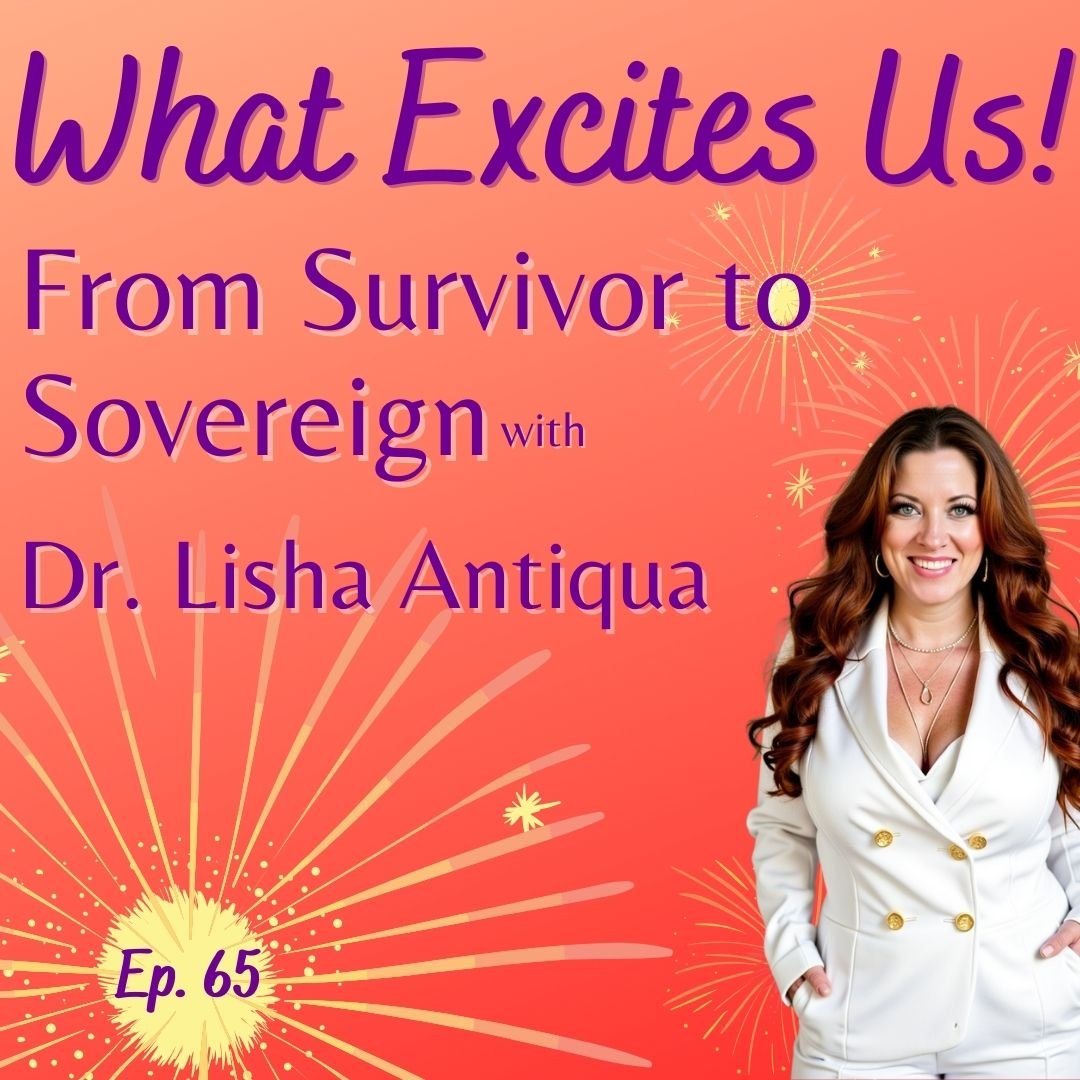
Ep 65: From Survivor to Sovereign - Trauma, Identity, and Embodied Leadership with Dr. Lisha Antiqua
Dr. Lisha Antiqua, who holds a PhD in Transpersonal psychology, and is the founding educator of Soul Psychology and Your Own University, where she helps women transform lived experience into meaningful leadership, healing work, and thriving movements.
Her work guides women from survival to sovereignty by aligning identity, intuition, and purpose into embodied success.
Connect with Dr. Lisha Antiqua:
lishaantiqua.com
yourownuniversity.com
TikTok + Facebook: Dr. Lisha Antiqua
The Women Thrive Summit:
Watch both Dr. Lisha and my talks free by registering here
In this episode we mentioned:
Momotaro Apotheca For all Your Vulva Care needs and wants - use the link or code GWYN20 for 20% off your purchase
Using these links helps to support WEU!
From survivor to sovereign … without turning “healing” into a full-time job.
Dr. Lisha Antiqua joins me for a conversation about post-traumatic growth, identity reclamation, and why trauma is an injury … not a life sentence, not a personality trait, and definitely not proof you’re broken.
We talk about why pleasure can feel unsafe after trauma, how to start with “micro-pleasures” that don’t overwhelm your nervous system, and how to shift from coping forever into actually living. We also get into Lisha’s Reclaim Intimacy work (brain, heart, and “part”) and the stages many survivors move through as they become leaders … Rebuilder, Messenger, Architect.
We wrap with where to find Lisha, what she’s teaching at the Women Thrive Summit, and what she’s building next.
We unpack:
Post-traumatic growth (and what it looks like in real life)
Why pleasure can feel terrifying after sexual trauma
“Micro-pleasures” and nervous system re-patterning (without forcing anything)
Identity reclamation … and why you don’t have to stay in the identity of “healing”
Reclaim Intimacy: reconnecting brain, heart, and “part”
The stages of leadership after trauma: Rebuilder, Messenger, Architect
Building a platform, a message, and a legacy from lived experience
Transcript:
[00:00:00] Gwyn: This conversation discusses overcoming trauma including sexual trauma. While nothing graphic is discussed, if you are not in a place to hear those words at all, come back when you are.
[00:00:18] Gwyn: Dr. Lisha Antiqua is a soul psychologist and founder of Your Own University, where she helps women transform lived experience into meaningful leadership, healing work, and thriving moments. Her work guides women from survival to sovereignty by aligning identity, intuition, and purpose. Into embodied success. I am so delighted to have you here with me, Dr. Lisha. Thank you for coming on to what excites us.
[00:00:52] Dr. Lisha Antiqua: Thank you. I am excited to be here. I appreciate you.
[00:00:56] Gwyn: Aw, I love it when it starts like that. That's so good. So our, listeners, viewers can get to know you a little bit better. Why don't you tell us your backstory that, you know, abbreviated, that led you to where you are now.
[00:01:09] Dr. Lisha Antiqua: Yeah. So I really think that this is a soul mission for me because my initiation into learning how to, um, overcome trauma really began about 18 months old. Was the first like kind of awareness that my family has of, um, CSA or childhood sexual abuse that I had. And, uh, then events happened when I was four, when I was seven, when I was eight, when I was 11, um, when I was 13.
[00:01:38] And at 13 I was running from an abuser. Somehow. I don't even know how we had these horse stables. Somehow I got out of the horse stable and to this day I don't know how I keep those things that like go in your brain like how did I get from that place to that place, right?
[00:01:55] Because I remember what was happening right before that and um, I ran out somehow to this place called Dry Lake in North Glen, Colorado. And I was just crying and literally a ball of light and peered in front of me. And I'd always seen angels and guides and remote viewing was something that we practiced in my household and just, you know, I had, I'd had that like super faithful, highly metaphysical, totally Catholic, magical miracle family. I don't know how to like ex strive them.
[00:02:30] And I was raised by, a Native American Lakota Oglala. So in that, like all these spiritual gifts were really just normal for me. I always had that, but this ball of light whom I saw as Jesus appeared in front of me and said, go home and tell.
[00:02:46] And I went home and even though I had told many times over and the first person I had to tell was my primary abuser. He went and he took care of the other person that was messing with me at the horses. And within a week, everything came out in the open and of what had been happening and what had happened over the years, my, adopted dad and mom split and healing began.
[00:03:14] Right the next, the next part of the journey began and, and I began to be initiated and nearly lose my life. Sometimes a really like literal near death experiences and, and other times just super terrifying, like losing everything or feeling blocked and around making money or not being able to live my purpose, right? It was all like different, um, but I nearly died. And each area that I teach on and in that I learned this pathway to healing, and that was about 2005 when that came out.
[00:03:48] Began being birthed. 2010 it really came out. And then since 2010, everything that I knew intuitively and lived intuitively and healed within me and reclaimed within myself, and was teaching others has now been proven, right? So then I went to school, then I went and got my master's, my doctorate and proved it all.
[00:04:09] And anyway, that's what I do. And, uh, I have just a deep commitment to helping people know themselves, reclaim their identities from those programs that we all run. And really heal from the effects of a crappy relationship or childhood, and then take their life experiences 'cause so many healers, right? Were wounded healers. Um, take those life experiences and put them out into the world in a really trauma-informed, beautiful way that will help them build empires and leave a legacy for their kids of hope and prosperity and joy rather than tragedy and trauma.
[00:04:48] Gwyn: Wow. What, what an amazing story. I love how, um, there's so many things that one would imagine are conflicting. Right, like the, you told your abuser that someone else was abusing you. Like, that's amazing. And, um, and, and the, the mysticism with Catholicism also. What so good.
[00:05:14] Dr. Lisha Antiqua: Right.
[00:05:15] Gwyn: Um, I,
[00:05:16] Dr. Lisha Antiqua: That's like my hair though. My hair's also confused. Yeah.
[00:05:20] Gwyn: I, uh, for many years considered and probably still do, if I think about it, just a bundle of tangents and paradoxes. Um. So I, I get that, uh, not in the same ways that you do at all, but, um, wow. And I know that you do a bunch of healing work with women, and I know that you are also now working with women who are writing a book and embracing their leadership in new ways. So talk about that piece too, please.
[00:05:50] Dr. Lisha Antiqua: So it was a natural progression, right? So I, I started out my career really in, uh, yoga. Right. And healing from cancer and adrenal failure in my twenties based on the abuse. Right. And, and started teaching yoga. I was 18, started teaching yoga, started training teachers at like 28, 29. Well, no, I was, I was 30 because my daughter was six months old, so I was 30 when I started training teachers.
[00:06:22] And I just continuously started work with people and helping people. Right. And, and it just grew really naturally over the last 20 years. And about 2018 people came into my life and they were like, can you write a program to certify teachers? 'cause I had written programs to certify yoga instructors. Um, I was like, yeah, sure.
[00:06:45] And so I started helping this company write a program and then the company went under. And I said, well, I'm gonna keep the program. And then all of a sudden I was training coaches and I was like, it took me years to actually shift over. Actually, it just happened the last two years to shift over primarily to people.
[00:07:04] But all like so many of my clients would come through and they. Like that was their next step. Once they had an intu Me to see once, once they saw themselves and they felt amazing within themselves and they could own their trauma and their trauma and their story and they have reprogrammed their system and understand that and how much power is in that.
[00:07:24] How the trauma went from an like depleting them and how it's wrong and how the world paints it. And they switched it to post-traumatic growth and it just, it amplifies. And now I have this gift that I overcame. I have this wisdom that I have, I'm here to share and I can help other people. And they, so many healers come through that, and yet they don't know how to really build a business and build a platform that's gonna stand the test of time.
[00:07:52] And it took me a long time there too, to realize, oh my gosh, I've been doing the same thing. I've written all these books, I've written all these programs. I, you know, I think, oh, well, I need to be a billionaire before I can like, like, do that, right? And it's like, no, like you pay your bills. You, you make a good living. You've been a single mom for 10 years, like. You've been just doing this, right?
[00:08:15] So yeah, help people. Help people do that. Not everybody needs to be a multimillionaire Now, would that be amazing? Yeah, right. But it's not a failure if you're not. That's kind of where I'm coming from. So I help people build a real great platform that gives them credibility, that boosts their confidence, that supports them so they can run a business. And teach from their life experiences. And I think a lot of trauma survivors. We are trans mutters. We are transformers, and we're here to do just that.
[00:08:48] Gwyn: Yeah, I concur with that completely. Everything you just said makes so much sense to me. I love the trajectory, right? Like you can be someone who has had absolute horror over and over and over again and get to a place where you are, I love the word, the phrase you use post-traumatic growth. Brilliant. I love that so much. Um, so let's just anchor that for a second for folks who are like, that's never gonna happen. It can totally happen. You just have to do the work. And it starts in really small places. So to.
[00:09:23] Dr. Lisha Antiqua: I think it's not. I'm sorry, I don't mean to like interject, but it's not just the work. 'cause so many of us say we go to the therapy and then we go to the spiritual retreats and then we go and we take the fricken' ayahuasca and then we come back and we're like in the coaching and we're like doing all this stuff and we're trying to bust through it.
[00:09:40] And it's still this effort right? To um, to manage and cope the PTSD and the C-P-T-S-D and the anxiety and the depression and the flashbacks and the dysphoria and dysmorphia and the like, all of these things and the emotional outbursts and the right, all these things that happen when we're a survivor of trauma. And we think, oh, this is gonna be the way it is forever and ever.
[00:10:03] And you know, if you go by what the world teaches us right now as therapists, as, as coaches, as anybody, the world teaches us. Even religion teaches us that we're fundamentally flawed, that we're broken, that once we're diagnosed, it's gonna be that way forever. That there's no healing. To stay on these drugs, to take these drugs, to do the things.
[00:10:25] And as long as you're buying into that paradigm, you're right. Right. But there's another paradigm that says we are divine beings and we can heal from anything. And and trauma is an injury. It's not a diagnosis. You don't have a mental illness, people, you have a mental injury, and injuries can turn into lifelong healing.
[00:10:47] Injuries can heal, and most of the time when those injuries heal, whether it's a broken bone or a broken brain, or a broken emotional system, or giving your power away to the world too much. Right. When you reclaim whatever that is, that injury, it heals stronger, right? And after years, like I can, I get triggered. Absolutely. Can anybody get triggered? Absolutely. But do when I'm triggered, do I go into flashback? Do I go into like that whole spin that used to happen? No. I don't have those reactivities anymore. Neither do my clients.
[00:11:29] Gwyn: Yeah, perfect. That's exactly where I was gonna go was the work isn't what we always consider work. Right. It's not that. Let's go sit on the Freudian couch and lie down and stare at a wall and dig deep into our mother wounds. Like that is a, I mean, for some people, if that works for you. Awesome. And getting farther down the path and what I talk about right now is that it's the pleasure that's moving us forward. It's leaning into those moments that feel good. And while I am a certified sexologist, it's not always the physical, intimate pleasure that I'm talking about.
[00:12:09] Just having good feelings and feeling them leaning into them is so crucially important.
[00:12:18] Dr. Lisha Antiqua: So can I speak to like directly if anybody's listening and you are the one in five people, men and women. 'cause it's one in three women and one in six men. Right? So let's just call it one in five, four and a half. So if you're the one in four and a half of people that have had sexual abuse, whether it's childhood or beyond, in adulthood doesn't matter.
[00:12:44] But in childhood you do have to get to reprogram yourself. In adulthood, you can heal from that ener injury a little bit easier. Pleasure is terrifying for your nervous system. To even know what you want is terrifying for your nervous system. And so yes, like I remember. Um, studying the pleasure principle, right?
[00:13:07] What is her name? You know the book, right? But anyway, like the pleasure principle, and I was, gosh, it was like probably 20 10, 28, 29, and I was so terrified. My whole nervous system shut down, right? I wasn't allowed to feel pleasure, or if I did feel pleasure, like I had to take it to the umpteenth level, and it was unsafe.
[00:13:30] It was risky, and it just didn't, it didn't. Work for me because I didn't know how to feel safe in being pleasure, right. And having pleasure and give myself that permission to have pleasure. So if this is you, I just wanna encourage you that Yeah. Gwyn's, right? Like it really is about your pleasure, your gratitude, living, living in this frequency of like.
[00:13:54] Heck yeah. Life is awesome. Right? And being able to get there and what do I like and, and allowing myself to have this. But do that inner work of like, hmm, hmm. Curious, like if I don't have to like what they like. Right. If my pleasure doesn't have to be this, like what could a mini pleasure be and begin talking to your nervous system.
[00:14:20] Literally like talk to your nervous system. We call it body talk and say, you know what, it's safe for me to have what I want. I'm gonna have this cookie right now. It's safe for me to just pause and have this moment in the sun. It's safe for me to fully enjoy and practice enjoying in the moment, and that's gonna help you regulate your nervous system to this new frequency that's gonna take you into being able to live in that pleasure and not be scared.
[00:14:50] 'Cause so many people that I've worked with, they feel like, especially when I talk about the pleasure principle or like what do you want? Or living in joy or gratitude, they're like that it's just not safe. And then they feel like they're broken or wrong because it doesn't feel safe. And you're not broken or wrong you're just programmed that way. And so you shift your program and that's what's gonna actually change the game for you.
[00:15:15] So then your nervous system goes, wait a minute, it's not safe not to be in my pleasure. Right? Like now it's just about, hmm, what lights me up? What is pleasure? How do I define it myself?
[00:15:27] Where do I feel it? The other thing that I wanna add here is so often pleasure is a turn on, right? And if you were raised to perform in turn on right, that it was performative, that you being turned on, kind of happened when somebody else told you you could. Right, or that turn on scared you to death because something bad was happening.
[00:15:53] Accepting that that's where your programming came from. And learning how to reprogram your parts, right? Whether you're a boy or a girl, you pick your parts, your genitals, and, and really do some body talk there too, like it's okay if I can get wet this way. It's okay if I can get wet that way and I don't have to react to my wetness.
[00:16:16] This is where I kind of screwed up, but I wish I learned to learn it, but I don't have to react to that wetness, and by giving myself away, I can enjoy and, and kind of percolate. In, in that turn on, in that pleasure, and it doesn't have to be sexual at all. But so many survivors of abuse. We have that automatic reaction to any kind of pleasure physically, and then we connect it directly to sex, and it doesn't necessarily have to do anything with sex.
[00:16:51] Gwyn: Yeah, thank, thanks for calling that out. Um, there's an amazing book, I don't know if you've read it, Come As You Are by Emily Nagoski
[00:16:59] Dr. Lisha Antiqua: Oh, I love, I love that book. Absolutely.
[00:17:02] Gwyn: Yeah. Genital non disco cordia, I think that's the
[00:17:05] Dr. Lisha Antiqua: Mm-hmm.
[00:17:06] Gwyn: Is like, oh, mind blowing. Okay. Yeah, that makes so much sense.
[00:17:10] Speaker: If you are a woman who finds conversations like this exciting, you are invited to please come and join us at the first ever reclaiming you in-person retreat this April in historic Norwich, Connecticut. We're going to have. celiac friendly food, Crafty things and ceremonies. It's gonna be cacao and massage and boudoir portraits or embodiment portraits.
[00:17:36] It's gonna be super fun. You are not required to do any of it. You can just come and chillax. If you just wanna be in a room full of awesome women, please come join us. Details are@reclaimingyou.net.
[00:17:50] Gwyn: And also I wanna speak to if pleasure feels impossible to access or it turns your nervous system into a jumble of blah, um, that's okay. That's just noticing that and recognizing that is a really, really great place to start.
[00:18:08] Dr. Lisha Antiqua: Absolutely. So in my program, Reclaim Intimacy. We reconnect that power between brain, heart and part. Brain heart and part. We're gonna call your genitals your part, right? And, and in that is just exploring that pleasure itself. Might sound weird. And being comfortable doing that and not bringing yourself to completion. Right. Just lingering in that want will help you when you have pleasure going on a rollercoaster or you have a pleasure like flirting with a cute boy and like, it doesn't mean it has to go any place. It doesn't mean it has to turn into something, right.
[00:18:50] It's just, it's just this opportunity to play in pleasure, whether it's eating a strawberry or yeah I don't know. Drinking my green drink is pleasurable to me. Like whatever you find that pleasure in is going to be okay. And when you can feel that turn on and you know that you're in control of it, it's not in control of you. 'Cause so many survivors we're programmed that it controls us and then we're told, well, you wanted it right? And therefore I gave it to you. And, and that victim blaming.
[00:19:25] So that is like massive of gaslighting for our own bodies and what happens to us. And so to reprogram that we go through like physical touch and self-exploration and body talk, and then feeling that while eating a strawberry, feeling that while going on a swim, right?
[00:19:44] And allowing yourself to reclaim that relationship with yourself. And that's one reason why it's like. Reclaim intimacy. 'Cause I see intimacy as into me see, but so many survivors, we don't have a me to see because we've been object identified or slave identified. And so to reclaim that is super, super powerful. Including your genitals.
[00:20:10] Gwyn: I talk a lot about pleasure, intimacy, and being at home in our bodies, and for real. If your vulva feels irritated, dry or uncomfortable, it's hard to soften into desire or connection.
[00:20:26] That's why I genuinely love Momotaro Apotheca They create plant-based intimate care designed to support vulva comfort, without shame, fear, or harsh ingredients.
[00:20:42] Their signature. Sav is antioxidant rich, made for regular use, and you only need a tiny pea-sized amount. So one container goes a really long way.
[00:20:54] Momtaro's philosophy around intimacy care and pleasure without stigma aligns beautifully with my work, which is why I am delighted that you can now get 20% off anything in their shop with my code GWYN20 at MomotaroApotheca.com.
[00:21:14] Yeah, absolutely. I love that. So can
[00:21:17] Dr. Lisha Antiqua: Yeah.
[00:21:18] Gwyn: more about your program? That
[00:21:21] Dr. Lisha Antiqua: Reclaim intimacy. Absolutely. Absolutely. So it's funny, so when I started my dissertation, I had studied, um, identity. Okay? My master's was around identity and, and what makes a person a person, and there are layers of consciousness and all that stuff. And I wanted to prove how trauma affects the soul.
[00:21:40] Okay. And I had written everything. The board approved it. I was so excited, but I could not prove that there was a soul. So I either needed, like Dolores Cannon, like a thousand people lined up, up the door, right? And like endless funds and, and tons of time to like prove this theory to get my doctorate. And I didn't know how that was gonna happen.
[00:22:06] So I literally, on a spur of the moment, I, my friend was in Cancun and I flew from Alaska to Cancun and I was staying at this little hosh kosh place, like in this little town on the beach. And I went out into the beach and I just was screaming and crying and like. How dare you take me this far. I'm like, what am I supposed to do?
[00:22:30] Like how can I prove that there's a soul? And this is how trauma affects a soul, right? I created soul psychology. I literally have created the courses. I'm like, how can I do it? And I got this download and it said, well, what rips every single part of a human apart? What's the one trauma that literally shatters every reciprocal that we have connection to self, and it was sex.
[00:23:01] It is our creation. It is physical, it is mental, it is emotional. It takes and claims our authority. Right? And it's relationship based and it separates body from soul. 'cause we have disassociation, right? Especially if it was ongoing, even if it was pleasurable.
[00:23:20] Even if it's what I call soft abuse. Right? Which is like nasty sweetness. You are my queen, you're my little angelou, blah blah. Right? That happens to so many women. That's not like what we see in the movies where it's a cr outright and like deathly like, no, like Daddy loves me.
[00:23:39] That's when I went in and I said, Hey, I had a meeting with the board. And I was like, can I switch it from, from soul to sex, right, from sexual abuse? Like that's what broke me. Like, can I switch it? And they said, yeah, you can switch it. And literally I went through my chapter one and if you haven't done a dissertation, you have to do five chapters, . But chapter one is like a proposal. So I redid my chapter one and I had to change one word. Yeah, one word. I thought I was gonna have to rewrite the whole thing. I was done in a moment and I went on vacation, I went scuba diving.
[00:24:15] I was like, oh my God, I don't have to redo this. So that said, out of that experience came Reclaim Intimacy. Which, um, brings my, how do you know yourself? Right? To have an in, into me to see, which is an Amazing You program. It's what I do holistic coaching in and train coaches in. It's called Amazing You. Is that modality, that method from my masters married into Sex and Sexuality and it's 12 modules.
[00:24:45] And when we go through it, it really builds back your relationship with sex. So if you were sexually abused. You don't know what you like. You don't know what your pleasure is, right? You know what other people like. You know how to please others. You're probably an expert at that. I remember in college leaving a boyfriend's house and thinking, well, I suck at everything, but at least I'm great at sex.
[00:25:08] Like that was my purpose. And it was devastating to me because that was my worth, a right? So in this whole process, you reclaim your worth too. So we go through these 11 elements or 12 elements of self, and at the end of it, that 12th chapter is really like bringing it all home and embodying your own sexuality, right?
[00:25:31] However you write it, it's not me telling you, it's me helping you explore. So it's much more like a, a coaching, right? Self-exploration and a safe space. But we do dive in and we talk about the effects of sexual abuse and what's normal. Because what's normal for childhood sexual abuse survivors or sexual abuse survivors is not healthy, but it is normal, and that normalcy is what we create from.
[00:25:59] Right. And so we reprogram the nervous system and reprogram the mind to begin understanding, oh, those butterflies that's my warning system saying, don't go there. It's not I'm in love and I'm gonna convince this person to love me and convince them that I, they should treat me kindly and convince them that they're, they should respect me by being a better person or being thin enough, or being smart enough, or being this enough, or being that enough.
[00:26:26] Right. It's a warning symbol saying, stay away. That's normal. We've already done this. That's normal but also reconnecting your relationship with Your parts right? Your relationship with your pleasure, your relationship with your partner, setting your standards right? What do you like, what don't you like?
[00:26:49] It's figuring out your erotic blueprint. Um, it's figuring out your attachment styles, right? So we go through all of all of that stuff that can block you from ultimately being able to share yourself, with yourself and a partner. And receive from that partner too. Receiving is really a big opening in that.
[00:27:13] Right. So, um, we talk a lot about that too. And you can find it at my website, lishaantiqua.com It's one thing that I do personally. It's not a training program like at Your Own University. Um, I work with people privately and couples. Yeah.
[00:27:28] Gwyn: That sounds amazing. Um, so just to be clear, it's, a coaching program container where you are doing, you are meeting with the people that you're working with one-on-one, and it sounds like it's 12 weeks. Is that correct?
[00:27:43] Dr. Lisha Antiqua: Well, it's 12 modules,
[00:27:44] Gwyn: Oh, okay.
[00:27:45] Dr. Lisha Antiqua: so it depends if there's a lot of sexual abuse, we do a session or two a month, right? And we go through 12 months. It's usually six months, and we do two sessions a month, and we spend. You know, we spend time in them, but it really depends on the level of trauma and the level of self-awareness that the person coming into the program does.
[00:28:11] A lot of the people that I work with are, are already leaders. They're already people that have gone to therapy. They've already done the seeking right. They're like, nobody will talk to me about the sex stuff. Right? They can go to a sex therapist or a sex coach, right? And we'll talk about pleasure and, and things and incu and stuff like that.
[00:28:31] They can go to a regular therapist and talk about, this happened to me and, and reed that in their nervous system for nauseam for a decade, and call that healing and learn how to go in and bitch and moan and look at what's not working because. It's effective for the system to continuously make money. My clients graduate and don't need me anymore. Or they go on to become a coach actually, and write their books and put together their programs.
[00:28:55] I had to figure out a way to serve them still, right? 'cause they outgrew the program. Or they can come to somebody like me and do this. Um, I am working with a few therapists and coaches to certify them in the method because it's bigger than me and I don't wanna be that. Um, this is not yet a book that you can take online, but it will be eventually the workbook and the program will be something that people can go into Barnes and Noble and buy. Um, but it could be a couple years.
[00:29:25] Gwyn: Yeah, and, and while it's wonderful to have those possibilities, there's nothing really like working with someone. Guiding you through and helping you get over those rough spots. And I really love the fact that you're like it. Yes, it's six months, but it could be more because you have to start with people where you, where they
[00:29:45] Dr. Lisha Antiqua: Where they're at. Right. So it's really self-honoring.
[00:29:48] Gwyn: yeah.
[00:29:49] Dr. Lisha Antiqua: Yeah. A lot of my clients go through, like they come in and they're like I wanna heal my sexuality, I wanna do that. We start on the journey and then about halfway through they realize I don't know myself. So then we go back and we do the Amazing You Method.
[00:30:04] They reclaim themselves, right? They, they go, oh, this is how I take care of each layer of my identity. This is how I clear and heal each layer of my identity, which is another whole segment, right? And, and then they go back and they finish the next six segments. So it's all really just kind of dependent on what, a person needs.
[00:30:26] Gwyn: Beautiful. And I deeply appreciate that. 'cause there are a lot of people, uh, coaches and therapists and others who are like, this is the program and this is what we're doing. And that's, you know, and it's like, well, oh, okay, that's not gonna work for some people. And, and that's fine.
[00:30:42] Dr. Lisha Antiqua: Yeah.
[00:30:43] Gwyn: in any case, um, we met because we are both speaking at the Women Thrive Summit coming up in March. It's so exciting and they clearly, they made these little pods of, of what, like six of us I think. Um, and they said that they were doing it very intentionally and boy, howdy were they. Um,
[00:31:01] Dr. Lisha Antiqua: Yeah.
[00:31:02] Gwyn: been great. Every woman in our little pod is fantastic and I'm so delighted to meet you. And I would love for you to talk a little bit about what you're gonna talk about, because love the fact that you go from beginning to, okay, what's next? And for where I'm at and, and for the people who are listening to this, I think they would like to know what is possible, what is next. And we talked a little bit about it at the beginning, but I'd love for you to tell us more.
[00:31:30] Dr. Lisha Antiqua: Thank you. So for the summit, I get to really speak into more of the person that has done a lot of the healing and is like I, I wanna take what I've learned. I wanna take this drama and trauma that I have and turn it into something that's going to be a change maker for the world. Gonna be a legacy for the world, gonna build for my community. And books and talks is a great way.
[00:31:59] So I have this program called Empire Builder. I started doing it in 2014, so it's helped quite a few people. Um, but it was always on the back burner. Like people would have to ask me about it, like, what do I do now? Can you help me write a book? Right. It was something like that and now it's my forerunner for this year because I realize that so many people have done the work the last 10, 15 years.
[00:32:21] Right. Our generation has really come forward. I'm 50, we've done all this in our work, but we don't know how to build that, that lasting legacy and how to utilize our books, our talks and our programs to make a career for ourselves to stand up from other people. And that's something that I've gotten to learn how to do over the years and, and I'm really proud of that.
[00:32:46] And I'm really proud of how I've helped people do that. So, I'm gonna be speaking on survivor to sovereign, right? How soul psychology helped women build empires. And we're gonna talk about soul callings. We're gonna talk about how we break through those limiting beliefs, how I can support people do post traumatic, um, growth.
[00:33:08] So they're taking their trauma and turning into a growing opportunity not only for themselves, but for others. And then how I support people in writing their books or certifying them in one of these programs. The Amazing You Method or Reclaim Intimacy and, um, how we teach soul psychology to help with disassociation and con recurring PTSD and all the crap that happens when we're not connected to our own vessels.
[00:33:34] And so you too can come home and tell. So remember God told me, go home and tell. And that's what I've been helping women do and, and men too. I do work with men, but mainly women. I help you, come home to yourself and, and tell your story, tell your truth. And I'm. So grateful that I'm now at this place in my career that I'm at the Goel.
[00:33:58] 'cause it took a long time for me to come home myself and then many, many years working with people to come home to themselves and, um. To be able to be at this tell place and get to speak on things like Women's Summit, right? And, and be a part of bigger stages and bigger groups, like this is just a dream come true and hang out with women like you.
[00:34:21] Right? We're all rocking. I love it.
[00:34:24] Gwyn: It sounds really fantastic. I can't wait to watch and participate. Before we wrap up in earnest, is there anything that I've missed that we wanna be sure to get in there?
[00:34:36] Dr. Lisha Antiqua: This has been just such a joy. Thank your audience for listening and, and if you know you wanna get ahold of me, I have a really awesome quiz at yourownuniversity.com. The research says that there's different levels to healing trauma, and I found there's different levels to really leading after trauma. And the first is the rebuild, right? The person that's still healing and dealing and coping, but a lot of rebuilders aren't really rebuilders right? They're people that are stuck in that safety of, well, I know how to cope. I know how to deal. I know how to process, and we kind of get stuck in this ego, identity of healing.
[00:35:14] And it feels really great because we're overcoming all the time. We actually rock at it. But there's a time to move on. And that's the messenger. And it's a message to yourself, a message to the world, like finding your message, finding what you stand for, creating your movement, right? Looking at that.
[00:35:30] And then there is the architect. And, um, the messenger's really like getting your certifications, getting your stuff together, and the architect is writing your books, building your empire, putting things together, and all of them work together. So, um, this quiz really tells you which stage that you're at.
[00:35:49] And so you can kind of see, well, where should I be focusing? And then you set up a call with me, there's a little masterclass that goes with it, and then you set up a call with me if you choose to, and I help you decide if you're really in that stage or you're stuck. Right? Processing is something else and, uh, the fastest way forward.
[00:36:09] And I might be able to help them. You, I might not be able to help you. Right. But that's why I have like all these women, like Women Thrive Network. We have this beautiful network of people that we can be like, Hey, but you should look her up and you should look them up. Right? Or they have that for you. So, yeah.
[00:36:25] Gwyn: Yeah. I love that. And I, I, I love a good old fashioned quiz. Remember?
[00:36:30] Dr. Lisha Antiqua: Right. It took me forever. It took me forever to create, like figure out how to work, but I'm just like, it's, it's short, it's sweet, and it really is just like, yeah, this like speaks to the survivor that's ready to thrive. Ready to just be like, okay, like we've done enough surviving right? We've done enough coping. Now we're ready. We're ready to thrive. We're ready to live.
[00:36:53] Gwyn: Let's go. Um, and I also love the fact that you're clear about I'm not for everybody. But yeah, it's important that, um, if I'm that to recognize when. The person and yourself are gonna be a good fit or not, and to be able to refer them out.
[00:37:09] So that is something that I actually, literally always will look for when
[00:37:14] Dr. Lisha Antiqua: Yeah.
[00:37:14] Gwyn: working with people because yeah,
[00:37:17] Dr. Lisha Antiqua: And, and sometimes I might have a perfect program for somebody, but they don't feel like a fit for me, right? And I'm just like, but I don't know if I can relate or I don't know if I wanna be in their energy. It just rubs me away. Right? And I have to invest a lot of time in the people I choose to take on as clients.
[00:37:35] And I only have so many spots in my calendar a year. I work with people usually for a year, right? Um, and, and the other piece is sometimes is vice versa, right? They're like, oh, I could really use what you want, but something in them is just like, but I don't know if you're the one. Right. And I want them to trust that because otherwise we're just spinning our wheels and we're wasting our time.
[00:37:57] Gwyn: Exactly. Exactly. And nobody's getting the help they need. So, I like to wrap up the podcast by asking you one final question, which is Dr. Lisha Antiqua, what excites you?
[00:38:13] Dr. Lisha Antiqua: Teaching excites me like a lot and, um, sunshine. I love just going out and being able to close my eyes and just bask in the sun because I lived in Alaska for 24 years and that wasn't really possible on the daily, especially if I worked because the sun would come up and down and. Yeah, like that's something I really don't take for granted and I absolutely love and fills me with so much pleasure. Like yeah. Turns me on.
[00:38:46] Gwyn: I love that so much. This has been really wonderful. Thank you. I appreciate you coming on.
[00:38:52] Dr. Lisha Antiqua: You are so welcome. Thank you so much Gwyn. I appreciate you.
[00:39:00] Please visit Dr. Lisha Antiqua at lishaantiqua.com and yourownuniversity.com if you would rather connect with her on social medias. She is Dr. Lisha Antiqua on TikTok and on Facebook.
[00:39:18] Speaker: Please come join us at the Women Thrive Summit. It is the third week of March. Click the link or scan the code to get more information and to sign up.
[00:39:30] Also would like to invite all the women who find these sorts of conversations and the idea of rest exciting to come and join me at my first Reclaiming You In-Person retreat in April in Connecticut, and thank you so much for listening.
[00:39:48] What excites us is produced, edited, and written by me. My name is Gwyn Isaacs. Please come visit me at whatexcitesus.com. All the music used is under the Creative Commons license, and that includes Steven Kartenberg and Julius H.
[00:40:06] And remember, you are loved. I love you