

What Excites Us!
Episode 64 : The Hidden Connection Between Sex, Food and Health with Dr. Dawn Dalili
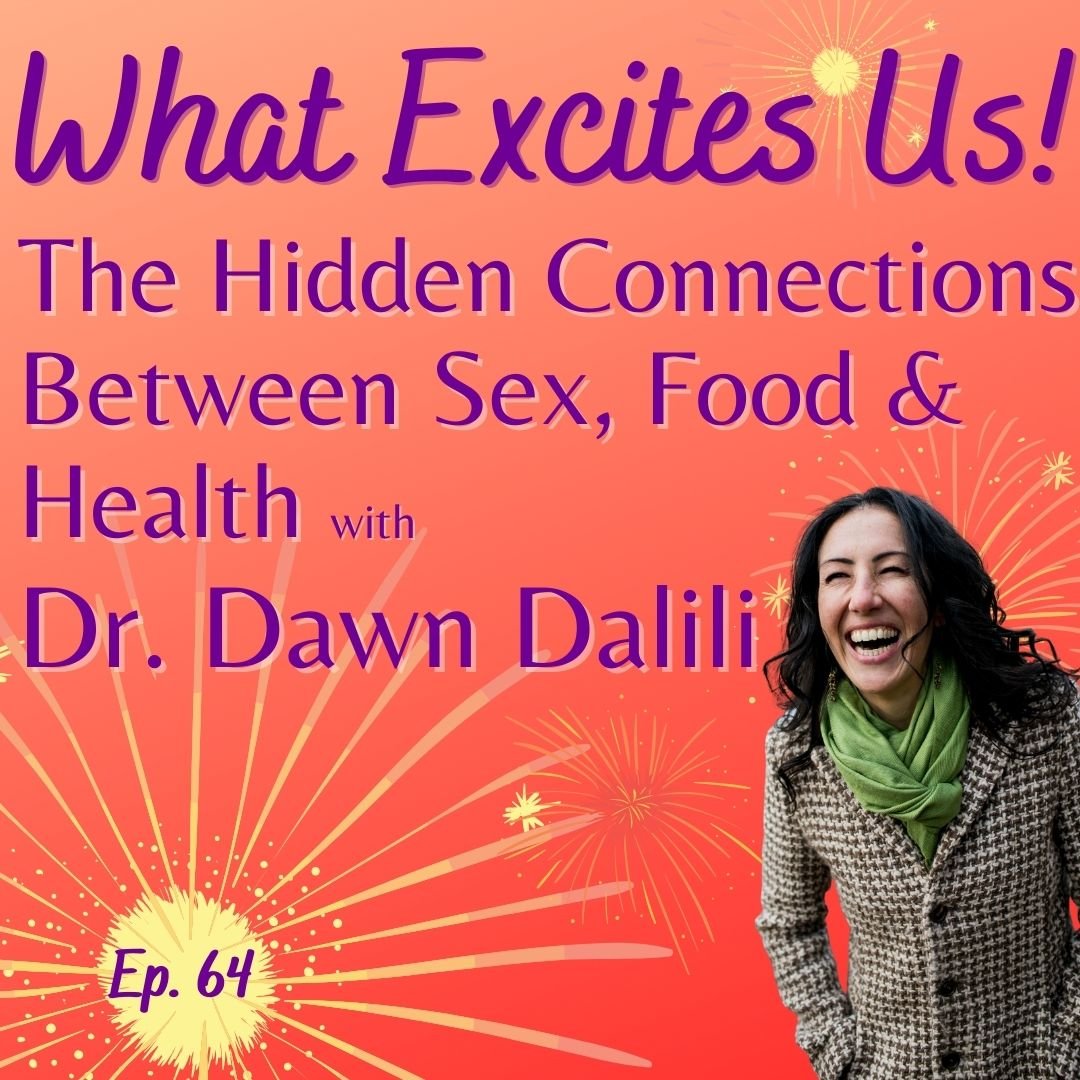
Dr. Dawn Dalili is a Naturopathic Physician specializing in women's health and hormones. She takes a whole life approach to health, often exploring sex and relationship, career satisfaction, and interpersonal skills such as boundaries along side labs, nutrition, and supplements to offer her clients a level of comprehensive care found in few places.
Please visit Dr. Dalili at dawndalili.com
In this episode we mentioned:
Artemesia DeVine - You can visit her website here or listen my episode with her here
Kasia Urbaniak — former dominatrix and author of Unbound: A Woman’s Guide to Power, exploring sexuality, embodiment, and personal sovereignty.
Alison Armstrong — relationship educator whose work on communication, gender dynamics, and intimacy supports the inner-aliveness theme of this episode.
Gay Hendricks - The Big Leap
Momotaro Apotheca ( use code GWYN20 for 20% off)
Using these links helps to support WEU!
What if your “health issues” aren’t just hormones… or willpower… or the latest supplement trend?
In this episode, Gwyn talks with Dr. Dawn Dalili, a naturopathic physician who connects the dots between sex, food, shame, boundaries, and what we allow ourselves to feel. We dig into how emotional eating often isn’t about hunger, why guilt is a reliable pleasure-killer, how “being safe” can show up as weight, pain, or fatigue… and the concept that might change everything: the pleasure ceiling, aka how good you believe you’re allowed to feel.
You’ll also hear practical ways to rebuild trust with your body (starting with how you eat), plus why “feeling better” can accidentally turn into “doing more”… unless you build space for actual satisfaction.
Some Key takeaways
A “pleasure ceiling” is how good you believe you’re allowed to feel… and it affects everything.
Emotional eating is often about safety, belonging, numbing, and regulation, not hunger.
Shame around sexuality can show up as pain, fatigue, migraines, menstrual symptoms, and chronic conditions.
Guilt is a reliable way to reduce pleasure… and keep you under your own “upper limit.”
“B12 won’t fix a boundaries problem” (aka supplements can’t override self-betrayal).
A true pleasure check includes: how it feels during, 30–90 minutes later, and the next day.
Rebuilding trust starts small: eat without distraction, chew, listen… stop telling your body to shut up.
“Feeling better” shouldn’t automatically become “doing more”… ideally there’s some of you left over.
Transcript:
[00:00:00] Gwyn: This podcast is about sex and sexuality, so please only listen if you are an adult without kids or other ears around that cannot, or do not consent to sensitive language and content. Thanks.
[00:00:14] Hi, I need to jump in real quick because a lot is happening. My ebook permission to once again for women who have lost their spark and are ready to come home to their desire. And the free mini guide that goes with it are officially out in the world. And I am hosting the first Ever Reclaiming You in Person retreat this April, which feels huge, sacred, And honestly really exciting. There's also a lot more coming, and social media is extremely unpredictable. The world is getting more conservative, especially around desire, pleasure, sex, and sexuality. And email is where we can speak freely. It's how we can. Connected no matter what the algorithms decide.
[00:01:02] So please come find me@whatexcitesus.com and get on my newsletter. I promise not to bombard you and now on with the show.
[00:01:18] Hello and welcome to What Excites Us!
[00:01:21] My guest today is Dr. Dawn Dalili, a naturopathic physician who looks at women's health through the lens of the whole person, not just the body, not just the symptoms, but also our sex lives, our relationships, our boundaries, and what actually makes us feel good. We are exploring what happens when we unknowingly set limits on how much pleasure, joy, or satisfaction we allow ourselves and how that shows up in our bodies.
[00:01:50] We also talk about sex, food, and health, and how they're all connected, and how shame, guilt, and shoulds mess with all of them. Please stay tuned and enjoy my conversation with Dr. Dawn Dalili.
[00:02:05] Dawn Dalili, ND: Thank you so much. Thanks for having me.
[00:02:07] Gwyn: Oh, this is, I'm super excited, like genuinely super excited. Why don't you give us a little bit about your background and how you got to even being a naturopathic doctor who's on this path.
[00:02:19] Dawn Dalili, ND: Oh, sure. Yeah, I'd be happy to do that. You know, it's, um, it's actually on my website that I went to medical school because I was looking for the happy, pretty skinny formula. And it's true, you know, I've had a contentious relationship with my body for as long as I can remember. You know, high school, college, I was really plagued by disordered eating.
[00:02:43] And, I was really drawn to naturopathic medicine more than conventional medicine because of the idea that it treated the whole person. And I loved the idea of mind, body, spirit, integration. And in my four years of medical school, we did a deep dive into bodies and there was just a lot of lip service around the mind and the spirit.
[00:03:07] So when I graduated, I realized really quickly that human beings are complex in ways that my textbooks never explained. And I put myself in a coaching curriculum for eating psychology and neurolinguistic programming and hypnosis so that I could figure out how to relate to this human being in front of me who was not the least bit motivated by information.
[00:03:41] Like that was the big discovery. Somebody would come to me and say, I'm a pre-diabetic, what do I do? And in my naivete I'd say, oh, this is really easy. Don't eat A, B, and C. Start eating more X, Y, and Z, and this problem is fixable. And they'd come back and say, well, my husband doesn't eat that way. Or you know, I had a really bad day at work and I just dove into the ice cream. And those were some of the motivating pieces for me to start, like kind of pulling other tools into it.
[00:04:18] That put me on this deep dive into psychology and understanding behavioral change, which just led to the next thing and the next thing. And about five years ago, I was talking to a really good friend of mine and she was like, if you had to summarize health in a sentence, what is it all about?
[00:04:41] And I surprised myself when I said to her, it's all about pleasure. And part of the reason that that was a surprise to me is because that was not really what my relationship to health was at that time. My health was still a little bit of a to-do list and I realized that I couldn't take people as far as they needed to go.
[00:05:02] Because there were limits to my own participation in, in these really critical areas of life. And then three years ago, I immersed myself in a 700 hour training around tantra and sexuality. Since then, , I studied sexual fantasy. I've studied with, Kasia Urbaniak about, you know, like, who does the dominatrix stuff?
[00:05:27] I'm enrolled in a dominatrix training that will start later. It's like I just keep looking for the edges and the limits of where we shut down , you know, so that, it's like a continuous journey of unfolding.
[00:05:42] Gwyn: Yeah. Wow. that's, really deep and intense.
[00:05:47] Dawn Dalili, ND: It's, yeah.
[00:05:48] Gwyn: how did you figure that that health and pleasure and sexuality were all like intertwined? Where did you. Start pulling those threads apart to see like, oh, this is, connected.
[00:06:01] Dawn Dalili, ND: That's a great question. Um, so initially my obsession was about emotional eating and body image. I was so curious, like what has someone feel beautiful and what has somebody be willing to be radiant? And so my initial clues that these things were really connected came maybe 10 or 12 years ago.
[00:06:27] So I was in my first few years of practice and in a short period of time I worked with three different women and I helped them to lose weight and then one after the other. Each one of them had an uncomfortable experience of getting attention. So one was at the grocery store and a man was flirtatious with her.
[00:06:49] Another one was at a restaurant and the waiter smiled, and then her husband was jealous and furious. It was just like these sorts of things. And then within the next three months, all of the weight came back. And so that's when I first started looking at, there's something about our comfort with being sexual beings that allows for this health transformation.
[00:07:19] And if we are not comfortable in our beauty, if we're not comfortable in our radiance, then we'll say that it's about food. But it's part of the body seeking safety to be bigger, you know, in the animal kingdom. And, and we really can't deny our animal nature. The animal kingdom bigger is safer. And then in our modern society, while it's maybe starting to shift, you know, and it's not necessarily politically correct to say there's still a truth in saying that there's a degree of invisibility for women who are in unconventionally beautiful bodies, right?
[00:07:58] So bigger bodies don't get as much of the hungry attention as women in thinner bodies. And so these things code into our subconscious mind as feeling safer. And so the woman who's like, I wanna lose weight, I wanna lose weight, I wanna lose weight. But then she's not ready to own her sexual power won't lose it.
[00:08:21] And so that's how these early connections came to be.
[00:08:25] Gwyn: Having a hard time pulling myself out of this conversation.
[00:08:34] Dawn Dalili, ND: You know, it's, it is amazing how it weaves together, you know, like you said, um, you know, it's not about food. Food issues are never about food. You know, if we're really, really tuned in to the human system. And we're not simultaneously seeking either distraction or a way of anesthetizing ourself from an intense experience, then our food choices will naturally gravitate towards the things that really have our bodies feel vibrant and alive.
[00:09:13] But when we are more motivated to, um, take the intensity of an experience from a 10 down to a more manageable three, four, or five. Food like alcohol, drugs, porn, binge watching, Netflix, they're all very, very reliable ways of shrinking the experience.
[00:09:38] And I think that's where, really the connection around sexuality comes in because I think that sexuality is probably the first place that most of us learned shame and that most of us learned that the capacity that we were born into is quote unquote too big for others. And that we have to manage it and make it smaller. And then, you know, again, that connection with food and sex is that food is a very, very reliable way to do that. And so if we've learned I am too big, then, you know, food is a way that we shrink that experience.
[00:10:21] Gwyn: Yeah. And also when we're feeling low or exhausted or just daily life is just, uh, it's very easy to sink into a chocolate bar or a bowl of ice cream or what have you, because that's reliably going to feel good, albeit temporarily.
[00:10:41] Dawn Dalili, ND: Yes. And you know, there are, two words I think that you just said that are really important. One is reliable. You know, other people not so much, but Ben and Jerry, incredibly reliable. There's no vulnerability in turning to Ben and Jerry, whereas, you know, asking our significant other, or even our best friend, our parents, asking another person who has their own full life, their own complex experience to be there for us, takes a tremendous risk.
[00:11:15] And many of us are unwilling to do that, you know? But then the other piece of it, which you said is it's temporary. And you know, I think that again, food like sex in an ideal world is pleasurable in the moment that we experience it, and it's also pleasurable let's say if I check in with myself 30 to 90 minutes later that I'm still happy that I did it.
[00:11:38] I'm not in a shame spiral. I don't wanna shower. I'm not in an ick sort of moment, and the next day when I check in with myself, I'm still happy that I did it. Those are sort of the three measures of time to know, you know, was it truly pleasurable as opposed to momentarily indulgent?
[00:11:57] Gwyn: That's brilliant. I love that. So I wanna go back to the shame and the sexuality and, how, that's one of the ways that for a lot of folks, it, it's the first time that we really deeply experience shame. How does that show up in the body and in the ways that we present ourselves?
[00:12:17] Dawn Dalili, ND: I think, for women's bodies, it can often show up with menstrual symptoms, painful periods, irregular cycles, PMS. Actually these things can, I think sometimes be caused by internal shame. Internalized shame. You know, it's like I, when I hate this part of my body and all of my thoughts are about how awful it is to be a woman, I'm not really setting myself up for harmonious menstrual cycles.
[00:12:47] It's embedded in our language. Women come to me, Gwyn, and they say, oh, well, you know, I have this concern and this concern, and of course my periods are awful, but that's just normal, right? And I'm like, whoa, no. If you have any question other than how do I collect the mensies while I'm living my life, we have something that we can bring into balance.
[00:13:07] Like menstruation should be the easiest thing in the, world, and it's just normalized again, that like part of being a woman is having to deal with this inconvenience. And I think that our speaking and our expectation actually influences the way that we have that as a lived experience.
[00:13:27] Sometimes shame becomes, um, present in the body through pain. Women, probably men too, but I just wanna disclose for about, for every man that I treat, I probably treat 49 women. So I will keep referencing women's medicine because it's where my experience is. But I would say chronic pain, chronic fatigue, even chronic migraines, which is a version of chronic pain, but people tend to separate them.
[00:13:55] Almost any chronic condition, I think can be connected if we connect the dots all the way back will get to internalized shame that then plays out through the habits of our daily lives and then becomes the clinical symptom.
[00:14:13] Gwyn: Yeah, I'm absolutely convinced that fibromyalgia and other things are connected to long-term, shame and stress and other complex PTSD sort of situations. Yeah.
[00:14:25] Dawn Dalili, ND: Absolutely. And you know, even stress, you know, stress is now widely accepted as the number one cause of chronic illness, which is I think a great first step. But it's like, why are we stressed? You know? And then when you look at stress, it's like, well, that's where the complex PTSD, the internalized shame and I would guess that you're familiar with this, with your work around sexuality, but so many people think trauma and they're still thinking what we might call big T trauma. Like if I wasn't raped, if I wasn't sexually molested, if I wasn't held at gunpoint, then I can't validate my own experience.
[00:15:07] But people aren't realizing that, you know, when they're a girl playing amongst a bunch of people and somebody makes jokes about a fishy ice chest. Or if somebody, um, you know, has a heavy period while wearing white pants and they're humiliated. Like, these are things that become internalized. You know, like the, the spectrum on what impacts our mental emotional wellbeing is massive and most people are still largely disregarding their own history as having an impact, which I think is part of the stress cycle
[00:15:44] Gwyn: Yeah, I absolutely agree. This society is just inherently traumatic.
[00:15:50] Dawn Dalili, ND: in many ways.
[00:15:51] Gwyn: Especially if you are living in a woman's body. Yeah. Is helping folks release the shame one of your early tactics, or does that come later on down the line?
[00:16:03] Dawn Dalili, ND: It really depends on the person. It's a great question. You know, one of the things that I'm overcoming as a physician is the expectation that when somebody comes to me, they're gonna say, oh, I'm tired. What do I take for that? I have this problem. What do I do for that? Even as a naturopathic physician, people are still kind of largely habituated to the idea that I will give them a supplement, change their diet, or give them an herb and make it all better.
[00:16:32] And so sometimes I'm working with somebody and I'll say something like, you know, B12 will not fix a boundaries problem. If you keep saying yes, when you are dying to say no, and that is the primary cause of your exhaustion. Do not expect a supplement, a medication or a dietary change to make a meaningful shift in your experience.
[00:17:00] And other people are like, no, no, no, no, no. How much B12? We are not going there. And so I do my best to meet people where they are, but there's, it's really about conveying gently, you know, if you just wanna get better enough to keep beating yourself up, which is unfortunately part of the ethos of American society right now, then yeah, let's take some supplements, get out of bed, you know, do your thing.
[00:17:32] You change your diet in this ways, but if what you're really seeking is radical vitality, and that's what lights me up, then we've gotta look at the belief patterns, the internalized shame, how that plays a role. And we've gotta start creating space in the permission field. And yeah, that usually takes some time, but the first thing that it takes is actually letting people know that that's real, and helping them understand how it's connected.
[00:18:03] Gwyn: Oh, that's so good. Speaking of connected, you talk about sexuality. Very very few physicians, naturopath or others even are willing to broach this subject. Um, I've even had gynecologists who were like, yeah, I don't really wanna talk about sex per se. How can you have those conversations comfortably? How can you help folks with these topics? Because it is all connected, but most people don't wanna talk about that.
[00:18:32] Dawn Dalili, ND: Well, you know, I think the first step was doing my own work around it. I couldn't speak about these things comfortably until I was really comfortable. My own body and with my own experience, you know? And I think that that's a big missing piece in education for physicians. Um, and so you take people who come into the conversation with their own conditioning and their own limitations and their own discomfort, and they hold a field in which, you know, this conversation is not okay.
[00:19:05] You know? And it, it's part of why I have done, you know, training after training, after training, just to sort of, immerse myself in a way of, of thinking. But then, you know, a lot of it came at, you know, from there into like just connecting dots. Um, a woman came to me maybe four years ago and said, my husband has touched me in the same three places in the same order for the last 27 years.
[00:19:38] Bored out of my mind. I'm doing my grocery list when we're having sex. Do you think testosterone would help? And I was like, um, no, not like, I mean, I get the temptation, you know, it's like, it's coming from this thing. Please let me just be broken so that I can be fixed. You know, there was a real, um, there's a benevolence in that kind of thinking, if I'm the problem then I can be part of the solution.
[00:20:09] But what became more and more clear to me is that if we as physicians collude with that kind of thinking, then we become part of the problem. You know, testosterone as an example, is a very powerful hormone. And I do use it. I have no problems with hormone replacement therapy. Everything has a time and a place.
[00:20:32] But I think that it would be remiss and irresponsible of me to give a woman who's bored testosterone because then I'm sort of hijacking her hormone system in a way that might facilitate self betrayal. So instead of speaking her boredom, you know, her horniness kind of takes over, but she's still not satisfied with anything.
[00:20:58] And so, that led me to these deeper conversations. How do we help people ask for what they want? And you can't ask somebody for what you want if you don't know what you want. And I can't know what I want if I am living in a head that's being carried around by a body, but I don't live in a body.
[00:21:22] You know, and so again, like so much of our society is like you are a head that is carried around from place to place in a body, but there's no disconnect.
[00:21:32] So it's like, well, how did we become heads carried around by bodies and then starting to look at the commercials? You know, I, I'm not much younger than you, but I think about the commercials of my childhood. And one that always comes to mind is a commercial that it's like, you know, eat the chili cheese fries, take the purple pill.
[00:21:52] And so we are told, like, we're literally trained, ignore what your body says. Take a medication, just shut it up. Everything that it has to say is inconvenient and keep doing the thing. And it's like, well. Why would I even believe something like that? So, you know, I peel back another layer of the onion and I start to think about the fact that in early school, you know, I was taught that experts were adults.
[00:22:23] Experts were the teachers, experts, were the people in white coats, experts were the police officers, or you know, like the, the systems outside of me. No one ever told me that I had an experience in my own body that I should listen to and trust. No one ever said, Dawn, you are your own expert. Listen, chew your food, drink water, pay attention, sleep when you're tired.
[00:22:55] It was always sleep on a schedule. Pee when the bell rings, eat when the lunch bell rings. Like we're literally trained out of ourselves. that's why I keep tracing it all the way back and back and back. And, and that's why B12 doesn't fix it. You know, it's like we've really gotta look at these systemic ways of thinking that have come out of conditioning.
[00:23:17] Gwyn: I talk a lot about pleasure, intimacy, and being at home in our bodies, and for real. If your vulva feels irritated, dry or uncomfortable, it's hard to soften into desire or connection.
[00:23:34] That's why I genuinely love Momotaro Apotheca They create plant-based intimate care designed to support vulva comfort, without shame, fear, or harsh ingredients.
[00:23:50] Their signature. Sav is antioxidant rich, made for regular use, and you only need a tiny pea-sized amount. So one container goes a really long way.
[00:24:02] Momtaro's philosophy around intimacy care and pleasure without stigma aligns beautifully with my work, which is why I am delighted that you can now get 20% off anything in their shop with my code GWYN20 at MomotaroApotheca.com.
[00:24:22] Yeah. talk more about that connection between sexuality and food and health and how it's all related.
[00:24:32] Dawn Dalili, ND: you know, the interesting thing about the, the connection is that I think it goes two ways, and that's one of the things that makes it really tricky. You know, I mentioned earlier that I've worked with so many women and, and now if I had to guess, I think that roughly 60% of my obese or morbidly obese patients have a history of sexual violation.
[00:24:55] And I use the term violation as opposed to assault because I'm not talking about rape, you know, I mean, for some of them, yes, it's frank rape. But for others it was something like I said, yes, when I really wished that I had said no, you know? And so I take the full spectrum of those experiences and just sort of, you know, put them broadly into like the, that sense of having been violated. And as I started to notice like, wow, there's this huge correlation between obesity and this really painful sexual history. That's one way, that they become connected. It's like I have an unconscious drive to feel safe in my body. I have an unconscious drive to feel invisible. But then there's also these things that I notice, like, let's say the woman who's bored and she starts to gain weight because she's seeking pleasure in socially sanctioned ways.
[00:25:53] so if I feel like it's wrong to ask for something new, unique, exciting, you know, either my partner's gonna make fun of me, or I'm violating my family code of conduct by being a sexually expressive woman, then instead of seeking pleasure through the body, I mean, these things were designed, they're built for eroticism, arousal, and pleasure. And yet, if I've just like wiped that as a possibility from the table, then I still live in a body that's seeking pleasure and now I just can't get it through sexual expression. And I'm more likely to turn that attention to sugar, refined carbohydrates, processed foods like a reliable dopamine hit, and one that I can do publicly.
[00:26:46] There's no scarlet letter written about the woman who ate cheeseburgers and fries and drink a beer. And you like, that's not the way that our society is brought up. And so it's like, oh, well that's fine. Like you're actually a cool chick if you go do that, but you're dirty if you express that desire for pleasure in another way.
[00:27:06] Then like you could almost think of it as um, like a balloon, right? And we squeeze one side of it and the other side just grows. And then we're seeking pleasure, you know, orally through food and, and things like that. The other connection that I see is, like when there's a rigidity, the person who is rigid about food is likely to bring that rigidity into all of their expression.
[00:27:34] And so then they're just rule driven and then there's no pleasure anywhere. Does that start to paint the way these things play out?
[00:27:43] Gwyn: Yeah, that makes a lot of sense to me. And it's a perfect segue to pleasure ceilings Talk to me about what that means to you and how it plays out for a lot of us.
[00:27:54] Dawn Dalili, ND: So to me, a pleasure ceiling is how good I believe I'm allowed to feel. How much pleasure am I allowed?
[00:28:04] Gwyn: Yeah.
[00:28:05] Dawn Dalili, ND: And so that's where I think of this glass ceiling. You know, maybe 10 years ago I read the book The Big Leap by Gay Hendricks, and he talks about these upper limits, which, you know, initially I understood, you know, around relationship and career.
[00:28:22] Like it made so much sense to me. The person who just signed a deal or got a raise comes home and picks a fight with their spouse because we have this net goodness, you know, it averaging out across all the buckets of life. But I start to see it in more and more places, and I really see it in health.
[00:28:40] So if I think I'm only allowed a certain amount of goodness and it's pretty low. Then as I take steps to improve my energy, I might start to struggle with pain or headaches. If I do something that, um, you know, clears up the headache, then like it becomes the whack-a-mole. Well, now I've got gastrointestinal issues, or now I feel sad all the time, you know, because somebody will say, well, you won't let me eat gluten anymore.
[00:29:14] And I'm like, well, I'm not the food police. I might help you make connections between food choices and, and your outcomes, but you'll never find me hiding under your table knocking bread out of your hand at night. I promise you don't pay me enough for that. Yeah, but it's part of people's mentality is like, well, I can feel good, but wah wah wo is me.
[00:29:35] I had to give up the donuts for it. And so what I started to see in that is like, wow, you feel better, but you can't celebrate it. You, you're actually sad about feeling better because in your mind it's framed as deprivation rather than celebration of vitality. And so there are all of these places that people will unintentionally undermine how good they'll let something be. And that's what I think of as the pleasure ceiling.
[00:30:07] Gwyn: Yeah, and that it plays out in, every potential aspect of your life. Yeah. Okay. So, so if somebody can be like, oh, perhaps I have a subconscious, ceiling in place here. What can we do about that?
[00:30:24] Dawn Dalili, ND: Yeah, that's a great question because we don't wanna just point out problems and then leave people stuck with them. That's mean. So the first step is curiosity. I'm always really cautious about the word why. Because the tone of voice that we use to ask the question will dictate the answer that we get.
[00:30:46] You know? So if I say, John, why are you eating that? You know, well, then you can bet that my defensive side is gonna come out and say, because I want to, damn, you know, am I allowed to curse on your podcast?
[00:30:57] Gwyn: Absolutely.
[00:30:57] Dawn Dalili, ND: Great. Okay. You know, because it's like, fuck you. Like, you know, that's the part that that comes out if I ask why in a very confrontational way, but I think held with deep curiosity, why can take us really deep?
[00:31:15] So it's like, huh, why, why do I feel that way? What happened? Um, I think a really useful question is like. I love the parts integration work. So IFS it, you know, very, very IFS influenced when, when it comes to working with people through these things and actually locating resistance in the body. So let's say that, you know, um, you come to me and you're like, Dawn, I wanna lose 20 pounds.
[00:31:48] And I say, great, picture yourself 20 pounds lighter than you are right now. Picture yourself in whatever version of that ideal body is, but I want you to take it one step further. I want you to picture the whole ideal scenario. So not only are you in the body that looks the way that you want it to look, but it feels the way you want it to feel, so you have the energy.
[00:32:17] And the comfort and the mental clarity, but also the emotional balance that you want. Because sometimes people will say, oh, well I remember being that way when I was 20, but I beat myself up all the time. And I'm like, okay, so that's not your desired state. Like you actually wanna picture yourself in that, idealized state which is physically, mentally, emotionally, energetically, all in, in alignment.
[00:32:47] And then, then you just start to listen for the voice that says it's impossible. And if there's no voice that says it's impossible, then you can start to locate physically the tension. So many people will describe, and, and Gwyn, if you want, you can try it with me now. I mean, you could picture yourself in whatever your version of ideal is and then just scan.
[00:33:15] For where is there a part of me that's tense? Where do I have the sense that this isn't possible, or it'll take way too much work or something will suffer? sometimes people will say, well, if I do that, I'll, I'll lose all of my friends. You know, like I, I worked with a woman who, um, it was part of her family ethos that she and her mom and her sister would diet together, but that also meant they fell off of the wagon together and then they got back on the wagon together and then they fell off the wagon together and they got back on the wagon together.
[00:33:53] And for her, if I succeed, I'm out of the club. Like part of what we all do together, part of our bond as a family. Is the cycle of failing and psyching ourselves up and repeating and then failing and the compassion and psyching ourselves up. So for her, the fear of actually being successful was that, like, then I'm all alone.
[00:34:20] So we're really just looking for what is your body reveal to us? And then the next step becomes how old is that part of you? Like when did you have an experience that left you believing that that was the reality? And there's some version of a decision that's made.
[00:34:41] So sometimes. I will have them do a visualization where they intervene and, and take care of the younger version of themselves. Like as a scenario plays out in their head that they actually step in and defend themselves. If maybe something happened and they weren't defended or that they comfort themselves. tell their younger self, it wasn't your fault. I'm here for you. And they offer all of the love that they wish they had gotten.
[00:35:10] Um, after we do that, I actually have them watch themselves age again, making new decisions. So rather than the life that they remember living from that fractured place, they give themselves an experience of healing and then watch time pass, making new decisions from that place of wholeness instead of from that fractured belief system.
[00:35:40] We carry it all the way through until they are their current age. And then I have them step into that version of themselves and actually experience it. So they step into it. Again, if you're listening right now, or Gwyn, you can do it with me. It's like picturing all of that and then you unzip that version of you and just step into it like it's a costume.
[00:36:02] So you're looking through her eyes, you're inhaling through her nostrils, you put your fingers in her finger slots and your toes and her toe slots, and you just feel a life lived without that belief system. And that's sometimes just our first step. We see where it unfolds from there.
[00:36:24] Gwyn: that's really powerful. powerful. Um. Do you have folks journaling and, and keeping notes along the way as they go?
[00:36:36] Dawn Dalili, ND: Sometimes, um, you know, it's, it's interesting because, and maybe it's my own resistance to journaling regularly, I tend to attract, attract people who are resistant to journaling. But, um, one of the things that I have people record, particularly because I'm so fascinated with the connection between food and sexuality, it's just, why do I eat?
[00:37:02] You know, most people say, I eat because I'm hungry. And I'm like, okay, let's find out. So for the next week, instead of recording what you eat, which is really emotionally straining for most people.
[00:37:17] It's triggering, right? It just like throws us into diet, culture and restriction and, you know, you're measuring stuff.
[00:37:26] And I won't say there's no value in doing it ever, um, but usually when I have my patients do it, it's for three days, every three or four months, something like that. It's like, go in, find out, and then get out. I sometimes have patients who are like, I have notebooks and notebooks and notebooks of everything I've eaten for the last 50 years.
[00:37:46] And I'm like, oh, that's probably not healthy. So let's stop that. But let's get back in touch with the why. You know, and again, tone of voice matters. So can you bring curiosity to it? And what people often come back and report is that when they got curious about why they were eating, that's when they found out that hunger is usually seven or eight on the top 10 reasons.
[00:38:16] So everybody thinks, oh, I it's number one. And then that's when they go, oh, I ate because it was time to eat. Or I ate because I was with somebody that was eating and I wanted to have the experience of belonging, or I ate because I was really stressed out when I came home and I just didn't wanna feel the way that I felt.
[00:38:38] You know? And so that's how we start to make these patterns because it's only once they begin to surface and we realize that I'm using food as a coping mechanism and that something else could be more appropriate, um, you know, then, then the lights go off. I worked with a woman recently who, um. When we first started talking about changing her diet, she started crying and said, I'm realizing that food is my only source of pleasure right now.
[00:39:10] And if you take this away from me, I'm not sure what I will do. You know, and in that case, what I ended up prescribing something maybe more from your world, but it was a pleasure practice. And so, you know, when I'm working with somebody on a pleasure practice, and I, I'd love to know your thoughts on this.
[00:39:28] Dawn Dalili, ND: I'm really clear. I'm not talking about masturbation. There's nothing wrong with masturbation. It's great. I am pro all versions of pleasure, but when I prescribe a pleasure practice, it's about discovery. And so I will say to somebody, just don't even touch the genitals. Like, you know what's gonna happen if you touch those, but why not stroke the inside of your arm really slowly?
[00:39:54] And find out if you like soft touch or firm touch, use your fingertips and then use the back of your nails. And then try a pen, and then try a feather. And then try a chain. Like just experiment with different textures at different rates, and actually wake up the connections between your body as a sensing organ and your brain.
[00:40:19] And we start to build a bridge and make it safe to feel pleasure. And again, you know, so sometimes we have to start with pleasure in non-sexual ways because the wall against sexuality is still too tall to climb over. And so we have to make it very, very non-sexual until we can make it sexual.
[00:40:43] Gwyn: Yeah, absolutely. I am. I, I am a huge, I have two main missions in this world. The first one is, it's okay to like what you like. And the second one is, pleasure is crucial. It's
[00:40:54] Dawn Dalili, ND: Yes.
[00:40:56] Gwyn: and it's not, it doesn't need to be sexual pleasure. That just happens to be where I've studied and where I am and what I can help folks with. Going to see a movie with your bestie is pleasurable, right? And so, um, all, all of these things, uh. matter Um,
[00:41:15] so the, the practice that you were describing, the official term is Sensate Focus. Um, and
[00:41:21] Dawn Dalili, ND: Thanks.
[00:41:21] Gwyn: It is something that I, definitely prescribe. I also often, have people take themselves out on self dates.
[00:41:28] You are welcome to use that as well. And, and, and the whole thing, like if you were taking somebody else out on a date, if you were going out on a date with somebody else, how would you start that? Is it a hiking date? Is it a dinner date? Are you going to a movie? Are you gonna take an nice bath, like whatever it is?
[00:41:46] And then if you are intending on, um, masturbation, let's take the orgasm goal out of it. Um,
[00:41:53] Dawn Dalili, ND: I'm curious if I may ask, just 'cause we're talking about building the muscle and one of the things that comes up a lot again because of that pleasure ceiling, is that guilt is a reliable way to reduce the pleasure in an experience. And so if I do something that feels good and then feel guilty about it, then I just upper limited myself.
[00:42:22] And so I'm wondering, as you tell people to take themselves on dates and to do these sensei practices, um, is that something that you see also?
[00:42:32] Gwyn: Absolutely. absolutely. Like the things that you are speaking of, it has to be. Uh, addressed in smaller steps. and especially with guilt and shame, and I, I'm sure you know this too, that, that if you try to tackle this whole big thing, it's just, it's just not gonna work. It's gonna
[00:42:54] Dawn Dalili, ND: Yeah.
[00:42:54] Gwyn: scrolling over and getting yourself some Ben and Jerry's. Um,
[00:42:59] Dawn Dalili, ND: ' cause people, again, it's, it's really benevolent, right? It's like, oh, well that's too much. I need a way out, you know? And then he said, cue Ben and Jerry.
[00:43:10] Gwyn: yeah, that's too much comes up quite a bit, in a lot of different ways, and not just in my coaching, but in my life. Um, with, with folks who ask me for advice on other topics. Um, how do you handle that when, when your, uh, patients and, and clients come to you with, that's too much.
[00:43:37] Dawn Dalili, ND: So help me understand specifically, uh, or, or gimme an example. Like it's too much to do. It's too much to feel what's too much.
[00:43:47] Gwyn: It feels too good. It's
[00:43:49] Dawn Dalili, ND: Oh, it feels too good,
[00:43:50] Gwyn: too intense. It's too, yeah. Like I, I don't deserve this kind of pleasure. Is is the underlying message. Not very many people actually say that.
[00:43:59] Dawn Dalili, ND: right? Yes. Okay. That, that makes a lot of sense. Um, I worthiness, right? Worthiness and deserving,
[00:44:08] Gwyn: yeah.
[00:44:08] Dawn Dalili, ND: unavoidable. In this kind of work. And, something that made a really big difference for me, Gwyn, I, I've done a lot of study with Alison Armstrong. I've taken every class that she offers with the exception of her horse course, and I've done most of them two or three times, you know, to like really dive in.
[00:44:28] And she helped me to flip the equation around worthiness and deserving. And, and I use these words interchangeably. Some of my patients will say, I'm not worthy. Others will say, I don't deserve it. But I think at the crux, they're speaking of the same thing. And what Allison helped me to understand is that most of us relate to deserving as a, like we have to earn it.
[00:44:54] And so I have to do something, do something, do something, and then I get the reward. And when, that is my perspective on life at best. I can go from negative, right, a version of in debt to neutral, but I can't ever get into surplus. And that's where vitality lives. If I can shift the equation and begin to ask, who can I be in the world?
[00:45:25] What can I offer? How can I show up. What do I have access to when I allow myself something, then I can go from neutral into surplus. I can actually expand into positive ground, unfortunately, and I, I say unfortunately because I, it's still often for my patients and other focused experience, but it's still a way in.
[00:45:55] So somebody might justify, for lack of a better way of saying it, I can be a better mom for my kids when I feel great, and therefore I'm going to do these practices that help me feel great. Because if I'm happy, if I'm energized, if I'm comfortable in my own body, then I can run and play ball with my kids and that becomes worth it.
[00:46:19] Or I can be a better wife or I can be a better partner. Or, you know, some, some version, I haven't quite figured out how to fully crack the code, where our first step doesn't include who I can be for somebody else, but I'll take it because it still has them in a practice that gets them experiencing something.
[00:46:40] And I find that if they can come back to the practice again and again and again, that sense of shame will begin to metabolize itself. Like it will, they'll actually realize. I just touched myself and it felt good and no one died. I just touched myself and it felt good. And the world didn't shift on its axis. I didn't get rejected from my family, you know, like whatever thing I was worried about. Oh, it didn't happen.
[00:47:20] And then that becomes the doorway to continuing. And so if you need to frame it as, I'm going to be a better person and that means I can volunteer at the PTA meeting, great. Like tell yourself what you need to tell yourself and do the practice, and then let the practice unwind you.
[00:47:39] Gwyn: Yeah. Yeah. a practice unwind you. I really love that. That's a great, great phrase. Um, at the beginning we, you talked about how we are so many of us heads being carried around by bodies. Can you suggest a small thing that we can do to start trusting our bodies again?
[00:48:01] Dawn Dalili, ND: I wanna recommend a couple of things and it's, I would say a small thing is chew your food. most people don't pay attention when they eat, and what I recommend to my patients is that, um, one, they serve themselves on a plate and sit down and then eat without distraction. That is simply a way of unplugging from the world around so that you can start to pay attention to what the body is communicating.
[00:48:43] If I'm scrolling through my phone, checking emails, or standing in front of the refrigerator at the pantry, you know, all of those things take me out of my body. A common thing that I see, especially of mothers, particularly mothers of young kids, is that they fix something for their kid. And as they're racing through the kitchen, they grab a bite every time, and then the body doesn't even have a chance to register that it ate something.
[00:49:12] And so part of the way we built the bridge is by unplugging from the distractions just for 10 minutes. Okay? Like you don't have to do it for an hour. It doesn't have to be an intricate practice, but if you could just serve yourself on a plate, sit down and say, I'm gonna give myself this time to eat this thing.
[00:49:33] And the way that I conceptualize this is that I think that we have an emotional body and a physical body, and both of them need to be fed. And when we are running around and eating on the go, the physical body gets the calories and the macronutrients and the, you know, I mean, ideally there's some nutrition in there, depending on what you're eating.
[00:49:54] Maybe, maybe not, but you still get all the calories and the stuff. But the emotional body is still saying, I'm starving. I'm starving. I need you to feed me. And when we can slow down and eat without distraction, the emotional body gets fed first and then it quiets. So then as we chew our food and swallow, the physical body has a chance to start communicating to us.
[00:50:22] And it, it says, I actually had enough, and so you can stop now. And that to me is. The first bridge towards trust. Is that I can actually listen and you'll tell me something, and if I respond, I feel better. You know, pain is another really interesting thing. Um, I did a summit on, I, I called it the desire dialogues, and I interviewed 18 people around sexual desire earlier this year, and a therapist said to me, pain is the body's perception of threat, and I can't believe I never quite conceived of it this way.
[00:51:09] What we tend to do when we feel pain is medicate it. We take either an anti-inflammatory or an analgesic and we tell it to be quiet, and then we do the thing that causes more pain. And so if you wanna start trusting your body. Stop telling it to shut up, stop telling it that what it has to say is inconvenient.
[00:51:36] I think you could take it a step further by saying thank you. So if your knee hurts, say, wow, thank you for telling me that the way that I'm moving feels threatening. I really appreciate the information and I'm going to make an adjustment. And the more that we validate and acknowledge and express gratitude, then the more the body will go, oh my God, thank you.
[00:52:05] Like you actually listen to me. Thank you. And ironically, it hurts less when it doesn't have to scream at us in order to get our attention.
[00:52:16] Gwyn: So if someone has recognized that we have a pleasure ceiling and we're starting to make the steps towards opening up that ceiling, what can one expect when it is open? When when you are open to more pleasure.
[00:52:33] Dawn Dalili, ND: My answer might surprise you particularly again, keep in mind I work with women and as women feel better, default behavior will have them do more. And so one of the things that I think every woman should do, or every person should do is actually do, do a self-inquiry.
[00:52:59] How would I know if I felt better and come up with something really tangible? So it might be like I would feel okay asking for something without feeling guilty about it, or if I felt better, I'd have so much more energy that I would walk my dog twice a day instead of once a day. I would know that I feel better, you know, when I, when all of my laundry is done and I'm not like swamped and overwhelmed by house chores.
[00:53:37] I understand that this probably doesn't sound like the kind of pleasure that you are asking, but I promise it's related because like I said, as women feel better, the natural thing for them to do is they do more stuff and then at the end of the day, they're just as tired as they were, or they're just as run down, they're just as drained.
[00:54:01] An hour before bedtime, and that's why it's really helpful to do a personal inquiry and come up with something really concrete. Like, I will know that I feel better when I'm able to do this thing that I just don't feel good enough to do, or when I'm able to do this thing easily that currently I'm doing by whipping myself into compliance.
[00:54:24] But when I do it effortlessly, then I'll know that I feel better. Because like I said, if you just have more energy and more mental clarity and your moods are more stable and you take all of that extra space and then you just start filling it with the to-do list, then I guarantee that, you know, at 8:00 PM or 10:00 PM or midnight, like whatever your wind down time is, you'll still feel drained.
[00:54:51] And then you'll go, this isn't working. But if you can look at at the concrete list that you made. And you can go, oh, it is actually doing something for me. Because to me, that pleasure, ceiling and vitality go hand in hand. They're actually inextricable. When you are allowed to feel good, you will experience more sexual pleasure, but you will also experience energy and aliveness and you will experience more creative force in your life.
[00:55:25] So maybe if it's somebody like me and you that runs a business, you might go, oh my God, I am knocking my business goals out of the park. Like that podcast was recorded and edited and done, and I'm not procrastinating. That's a version of expanding your pleasure ceiling. So is I had three orgasms if I never had an orgasm before.
[00:55:48] Right. The point being that it shows up in all of these ways that matter to you. And so rather than being specific and saying, oh, it always looks like weight loss, or it always looks like more energy. It doesn't, but it always looks like what matters to you in your life.
[00:56:05] Gwyn: Yeah. So personal satisfaction is what I'm hearing. Like a, a, a, a deep sense of satisfaction as opposed to, oh, I check things off the to-do list. It's, I check things off the to-do list and I feel awesome about it.
[00:56:20] Dawn Dalili, ND: Yes, yes. And ideally, there's some of me left over after the to-do list.
[00:56:29] Gwyn: Yeah.
[00:56:31] Dawn Dalili, ND: You know, my to-do list didn't leave me feeling hollow and empty and wrung out.
[00:56:36] Gwyn: Right. And needing to feed my toddler frozen peas, 'cause that's all I'll eat tonight. Right?
[00:56:41] Dawn Dalili, ND: Exactly. Yeah, exactly. Exactly. So it could look like more creative meals. It could look like music when you're cooking dinner. It could look like de you know my, I have a teenage son and he plays DJ and we dance around the kitchen when we're making dinner. That's how I know that my pleasure ceiling is high.
[00:57:03] Like when I'm getting a meal on the table, it's really different than when we're dancing around the kitchen to prepare something together.
[00:57:11] Gwyn: yeah. Connection and satisfaction, that's lovely. That's Yeah.
[00:57:15] So, um, I, I really, I could talk to you all day, but you have a masterclass that I wanna make sure that I mention, tell, tell us about that, please.
[00:57:23] Dawn Dalili, ND: Yeah. Thank you. Um, so the masterclass I is about like, what does it mean to look at health deeper than hormones? You know, so many people in our age group, I am in my mid forties, I think you mentioned that you're, you know, fifties, early fifties. the conversation of this 10 year period of life is like, oh, it's my hormones.
[00:57:46] Oh, it's my hormones. And you know, that's a yes and conversation because so much of what you and I have kind of talked about today is that these lifestyle factors, these belief systems, these ideas around worthiness, they're actually what influence your hormones. Hormones are the how, and life is the why.
[00:58:09] And so in this masterclass, I do my best to paint a picture for women about what it would mean to embrace whole life health. You know, unfortunately, I think the word holistic has been a little hijacked and holistic now means we're gonna look at your gut health, you know, in addition to, I don't know, your CBC, or whatever people are doing.
[00:58:33] And it's like, okay, well that's more thorough. But again, what about your boundaries? What about your career satisfaction? What about your creative expression? What about your sexual satisfaction? What about your ability to identify what you want and then make a powerful request?
[00:58:52] And how do we look at those as the critical nutrients of life rather than being stuck in a conversation about counting carbs and calories and steps and thinking that a certain amount of vitamin D is gonna fix everything. Like, I'm not saying that any of that stuff isn't important, I'm just saying it's incomplete. And I really wanna empower women in particular because I do think that women are the community building agents of our society, and you're not changing the world if you're exhausted and stuck on your couch with a migraine.
[00:59:32] So let's begin to look at filling in the picture what is whole life health so that you can make the changes that actually matter, so that you can be the vibrant woman that you were born to be.
[00:59:49] Gwyn: Yeah, I love that. I am 100% gonna take that because I can always use more information and that sounds wonderful. There will be links wherever the links are placed on this particular video or, uh, podcast. I Like to end the podcast with one final question, which is Dr. Dawn Dalili, What Excites You?
[01:00:10] Dawn Dalili, ND: Yeah, I love this question. What excites me is aliveness, or, I mean that's really, it might sound cliche coming from my doctor, but I am lit up by people who are fully alive and I am committed to turning over every stone to figure out what gets in the way and how do we move it so that we can bring more aliveness and full self-expression into the world.
[01:00:42] Gwyn: That's wonderful.
[01:00:44] Dawn Dalili, ND: Yeah. Thank you.
[01:00:45] Gwyn: yeah. that excites me too. This has been great. I really, really appreciate you taking the time, um, to speak with me how can people find you?
[01:00:56] Dawn Dalili, ND: It's, you know, DawnDalili.co m, but I would say, you know, that's a great place you can find me on, on Instagram, but I'm much more of an emailer and a, and a class maker.
[01:01:07] You know, I don't do so well in, in podcast, I mean in, in soundbites. You know, I really like, I really like the long form educational things, but, um, Gwyn, before we close, I wanna thank you for the work that you do. Making a space for people to explore sensuality, sexuality, and even to hold the question, what excites us is so important because like I said before, that is vitality, pleasure is aliveness. And having a forum to explore what is exciting is maybe one of the most important things that you can do for your health and wellness. So thank you.
[01:01:47] Gwyn: I'm a little verklempt, thank you. That's very, very sweet.
[01:01:53] Please be sure to visit Dr. Dawn Dalili at her website, dawndalili.com
[01:01:58] That's D-A-W-N-D-A-L-I-L I.com. dawndalili.com
[01:02:09] There are lots of great free resources there for you. Also, please visit whatexcitesus.com for more episodes information, sign up for the newsletter and so much more.
[01:02:21] Thank you so much for listening. What Excites Us! Is produced, edited, and written by me. I'm Gwyn Isaacs. The music is by Julius H and Stephen Kartenburg, and it's used under the Creative Commons Attribution license. I really do love hearing from you. Please let me know what you think or if you have feedback or what have you. And don't forget, you are loved. I love you.