

What Excites Us!
Episode 66: Chemistry isn’t Enough: The 3 Pillars of Great Sex with Deborah Kat
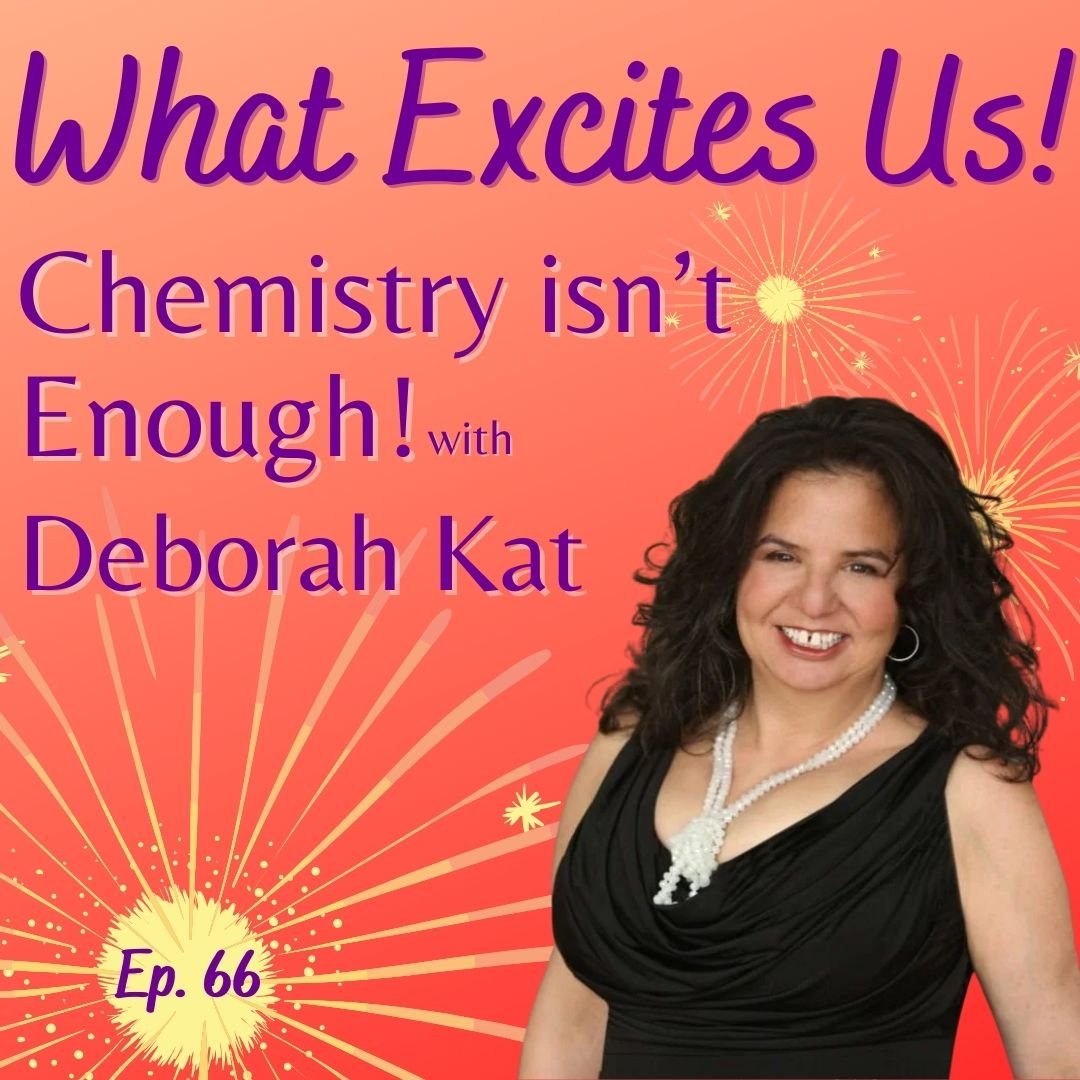
Ep. 66 - Chemistry isn’t Enough: The 3 Pillars of Great Sex with Deborah Kat
Deborah Kat is a sex expert, tantric educator, and professional Domme, as well as host of the Better Sex Podcast. She works with men and couples to normalize the trials, tribulations, and joys of sex while helping them build deeply satisfying relationships.
She is the host of Better Sex Podcast ~ Unfiltered Conversations and Sex and Relationships.
You can also find her on Facebook
Get your shopping on!
Using these links helps to support WEU!
Momotaro Apotheca For all Your Vulva Care needs and wants - use the link or code GWYN20 for 20% off
Agreeable Agony - Makers of Fine Kinky Play Items - use the link or code SEXFAIRYGWYN for 5% off - please support this lovely small business!
überlube - Only the best High Performance, body friendly Silicone Lube available! Recommended by medical professionals, sexologists and many households. Get yours here.
Toendi - Adult Toys by a manufacturer that cares! Use this link or code for 10% off your order!
Or code gwyn0122
Chemistry can spark attraction… but it rarely sustains intimacy.
In this episode, Gwyn Isaacs talks with Deborah Kat about what actually carries relationships past the honeymoon phase: empowerment, communication, and pleasure skills.
If you’ve ever felt deeply connected at first… and then slowly confused about why desire faded, this conversation offers a grounded, compassionate reframe.
Deborah Kat is a sex expert, tantric educator, professional dom, and host of The Better Sex Podcast. Together, she and Gwyn unpack the myth that chemistry alone is enough and explore the real skills that sustain intimacy over time… skills most of us were never taught.
This episode dives into Deborah’s three pillars of great sex and relationships:
Empowerment — knowing your yes, your no, and your wants
Communication — timing, tone, nervous system safety, and repair
Pleasure skills — touch, attunement, curiosity, and practice
Along the way, we talk about how cultural scripts (romance novels, sitcoms, movies) quietly sabotage real relationships, why fantasies don’t equal obligations, and how treating relationship like a lab instead of a performance can bring more ease, safety, and desire.
This is a thoughtful, practical, deeply human conversation about intimacy as something you practice, not something you magically master.
Some Key Takeaways
Why willingness and permission matter more than “doing it right”
How pleasure is a learned skill, not instinct
Common communication mistakes couples make around sex
How to start hard conversations without pressure or shutdown
A grounding boundary practice for knowing what’s yours (and what’s not)
Transcript:
Ep 66 Deborah Kat - Chemistry isn't Enough
[00:00:00] Gwyn: This podcast is about sex and sexuality, so please only listen if you are an adult without kids or other ears around that cannot, or do not consent to sensitive language and content. Thanks.
[00:00:21] Hello and welcome to What Excites Us! Today I am joined by Deborah Kat, and we're talking about why chemistry alone doesn't carry relationships very far, at least usually not past the honeymoon phase. And what usually does carry relationships, and that's empowerment, communication, and pleasure skills, all the things most of us were never taught, but absolutely need.
[00:00:47] Gwyn: But before we drop in a few things. Things.
[00:00:51] First of all, if you are not on my email list yet, please sign up. It's a place where you and I can have actual conversation. And we're not at the mercy of the algorithm overlords, which matters when your name is Sex Fairy Gwyn. So please go to whatexcitesus.com and join there.
[00:01:12] Now, if you are listening to this in real time, I will be speaking at the Women Thrive Summit on March 17th. My talk is called Pleasure as Power, reclaiming Confidence through Desire. You can register for free by following the link. You know where the link is? It's in the bio or on the notes, wherever it is that you're listening. There are 50 amazing speakers, and I cannot believe I'm one of them. It's so cool.
[00:01:43] They're covering a whole host of topics and women in various stages of their life and business, and you should join. It's free even if you are a thoughtful man. You'll probably get something out of it. So go snag your tickets now before you forget, because I know you probably have a DHD. So go do it now.
[00:02:04] Also, I am hosting the first ever reclaiming you in person retreat April 10th through 12th In Connecticut, it's gonna be LGBTQIA plus affirming. Largely because me and several of the other providers are, it's celiac friendly it's almost all private rooms, massage. There's gonna be a cacao ceremony and ecstatic dance and a vision work workshop. It's gonna be a place for you to rest and reset so that the rest of you gets a lot better. There's not gonna be any sort of performing. So if you're not into any of it, that's cool. Just come and hang out. It's gonna be a bunch of badass women 'cause it's a carefully curated space and we would love it if you wanted to join us.
[00:02:52] So women and afab folks, again, reclaiming you.net or just go find it in my bio. Okay. One last piece of context. This episode was originally recorded for the virtual Reclaiming You Summit that I hosted in September, and I loved this conversation so much that I really wanted to share it here. And while I don't have details yet, I am percolating what the next reclaiming You Virtual Summit is going to be.
[00:03:21] So if you are interested once again, get on my mailing list because that is. Where I will share it first, of course
[00:03:31] Deborah Kat is a sex expert, tantric educator, and professional dom, as well as the host of the Better Sex Podcast. She works with men and couples to normalize the trials, tribulations, and joys of sex while helping them build deeply satisfying relationships.
[00:03:51] And we're here to talk about the three pillars of great sex and relationships, communication, empowerment, and pleasure skills. But before we do any of that, tell us a little bit about how you came to be this person in this work.
[00:04:10] Deborah Kat : I always like to say that, I was good in my past life and so I got to be born in grow up in San Francisco. What that meant is that I got to meet and see incredible people and different versions of love and relationships. As a young person my first my first relationships started at the Renaissance Fair. And if you are familiar with the Renaissance Fair, you know that it's all about, it's about fun and flirting, and it's about bringing, all of you everything that you do. And so here I was, you know playing during the fair you know, I've got a character, I've got costumes, I've got props.
[00:05:01] And so it's just natural that we would bring that from our day into our evening play. And I didn't know we were doing power play. I just thought, how fun would it be if, let me be your, your scullery maid or you can be my stable boy. And so we brought a lot of these things into our sex life shamelessly. And then when I was, I stopped dating guys from the Renaissance Fair and I started dating, you know, guys outside of that. And it was like. What do you mean you want to dress up? What do you mean you want me to do this, that, and the other thing. And I was like, I've done wrong.
[00:05:48] And so like, the shame really shut me down. And so, I, I lived in that world for a while and I dated badly for quite some time. And then after a particularly gnarly breakup, I was like, I'm done with this. I need to figure this out. And so, this is back in the day before, before you could go online and Google it. So I read all the books, I took the workshops, and I tried so many different things
[00:06:24] At one point, I guess you'd call it an app, but anyway, it was called Tele Personals. And it was literally that you would leave a an outgoing message on the phone and then somebody would listen and then they would respond and it was all audio.
[00:06:41] I had this huge list. I had in the time I was, going to school in Santa Cruz, so I had the Santa Cruz list, and then I had the San Francisco list for when I went to go visit my mom. I would literally, as if somebody left me their phone number, I would call them back and I would go on a date with them. And I made all of these little, exercises for myself, like sometimes it would be, can I sit up straight through the whole meal? I use the right fork? Can I practice listening? Can I practice, interrupting or, or all of these different practices that I had.
[00:07:16] And so it came from this place of I really need to figure this out. And I did indeed meet my partner and 27 years later, we are gonna get married. So something about it worked, but along the way I started to figure things out, right? I figured some things out around, around what to do, around sex, around relationships, and then as I was doing this, I was, I was taking more classes, I was learning more, and it just became, I was the person that people started asking a lot of questions about. And so I was like, oh, I seem to have some answers. And so that's how my coaching and relationship experience was born.
[00:08:02] And then during the pandemic, I wanted to give back. And so part of that's how the, the Better Sex Podcast was born. Because I started talking to people on Facebook Live and we started answering questions and then, the podcast was born. So that was, that was really fun.
[00:08:19] Gwyn: That's really delightful. I am in awe of your partner of 27 years. That's fantastic.
[00:08:26] Deborah Kat : know, not all those years were beautiful years, and that's actually how the pillars came along, was really learning like, oh, this is the place. So the three pillars are empowerment, communication, and pleasure skills. like many folks socialized as female, I was really good at serving and taking good care of my partner. it was often at the expense of my own wants, my own needs, my own desires.
[00:09:00] So learning. What I actually wanted was a big deal. I'd always thought of myself as like, I am a liberated woman. I am smart, I am all these things. And yet I was following the scripts that, we're given as, as young people around how to learn how to be in relationship.
[00:09:27] You know, I, I talk about how back in the day I used to read a lot of Harlequin romances, right? And so what I learned about relationship from Harlequin romances was that my partner should know. My partner should know what to say, what to do, how to touch me, where to touch me, when to touch me, how much pressure to touch me. And, my body was just gonna go off and so I didn't need to do anything. I just needed to look to him. Right. I also learned from Harlequin romances that there was, that, that you needed a lot of conflict to make things hot and spicy. And so, needless to say, Harlequin romances are terrible models for relationship. But if you think about it, so are so much of what we have out there in culture, right?
[00:10:22] I am somebody who grew up with, "Married with Children", which is another way to interact with your partner. For those who aren't familiar, it's a very acrimonious relationship and, a lot of, teasing and one downing. And it again, it makes great, it makes great television, but it's crappy relationship advice.
[00:10:49] Gwyn: I was just gonna say, so much of culture is horrible relationship advice, whether it's for romantic relationships or even friendships that so many sitcoms get their laughs from people being mean to each other. It's just awful.
[00:11:04] Deborah Kat : it, it really wasn't the way that I wanted to be in relationship. And fortunately my partner was a willing ish subject. The things that we came in with that I think is really important to just talk about for a moment is I had my tantra practice, right. I had a practice of coming to myself and he's an aikidoist so, so he also had a practice of his own. So this idea of relationship as practice was born there.
[00:11:36] And so it did make it easier to be like, Hey, I've got this crazy idea you wanna get on board. And of the time he was a no. Which was great because, one of the very first things that we need is is to feel empowered to know what our yes is, to know what our no is, and then to be able to say it. Because, the, the beauty of a good solid no is that you can trust somebody's yes.
[00:12:05] And so really having that experience, and then just being able to learn, like, I'm one of these folks that it's like, I've got an idea, and the minute I've got an idea, it's like, Hey, let's try it. Let's, what, what can we, and he's, he's a bit on the slower side, a little bit like, now wait a second, let's step back. We would practice things together.
[00:12:28] Gwyn: I talk a lot about pleasure, intimacy, and being at home in our bodies, and for real. If your vulva feels irritated, dry or uncomfortable, it's hard to soften into desire or connection.
[00:12:44] That's why I genuinely love Momotaro Apotheca They create plant-based intimate care designed to support vulva comfort, without shame, fear, or harsh ingredients.
[00:13:00] Their signature. Sav is antioxidant rich, made for regular use, and you only need a tiny pea-sized amount. So one container goes a really long way.
[00:13:12] Momtaro's philosophy around intimacy care and pleasure without stigma aligns beautifully with my work, which is why I am delighted that you can now get 20% off anything in their shop with my code GWYN20 at MomotaroApotheca.com.
[00:13:32] So let's talk about your three pillars of relationships communication, empowerment, and pleasure skills. You, we've touched on it a little bit, but can you go deeper into that?
[00:13:45] Deborah Kat : So, what I found with working with my clients, and of course my own relationship is that these are three they're like a, this, the, the legs on a stool. If we don't have all of them, then things fall apart, right? We need to be really understanding on what is ours, like, what is our desire? What is our, what is our no. What is our, yes. And then we have to be able to, communicate it, right?
[00:14:11] Communication is art. It's probably a science too, but it's really an art. For the most part, like I came in not really having great communication skills and so when I would wanna talk to my partner about something first of all I would come in mad and hot and with a lot of energy and like, we need to talk. And, being at the receiving end of a we need to talk is like an automatic shutdown. Right. You are not gonna get anywhere with that. It is going to bring up the defenses in your partner. And so, learning how to, learning what I needed to say, learning how to say it, learning the timing around saying it, and what energy I was bringing to it was all very important in transforming it.
[00:15:02] First of all, communication is a two part dance, right? There is the thing that needs to be said, the thing that needs to be received and taken in, and then. And then you have your back and forth with it. So that's the communication pillar.
[00:15:18] And then the pleasure skills part is, it's like if you know what you want and can ask it for what you want, then the next thing is is like can you actually deliver the kind of touch, the kind of pleasure, the kind of temperature and texture that your partner wants and needs for, for it to be pleasurable?
[00:15:43] Touch is a nuanced skill. Maybe we grew up in a huggy house. Maybe we didn't grow up in a huggy house. Maybe we grew up in a house where, we watched people hold hands and touch each other a lot. we didn't. And so, first of all, there's that piece of, of finding the level of touch that is, that's, that's right for our, for, for us and for our partners. And then there's the mode of touch, right?
[00:16:13] I talk about touch a lot because that's the most easiest one to, to get ahold of. But when I'm talking about pleasure skills, I'm talking about setting the atmosphere up. I'm talking about, using all of the senses. I'm talking about being able to use your voice and to use all of the different senses and skills and learn how to do that. Learn how to come into resonance with our partners so that we are attuned to each other.
[00:16:45] I should say that the pillars are there's definitely some overlap, right? So for instance, I talk, I often talk about attunement and what I mean by attunement is when we are resonant or in tune with our partners, right? When we can read the room and see what's going on with our partner and match that. That is very important when it comes to communication. It's very important when it comes to sex. It's very important when it comes to pleasure. know, can we find that place where we are, where we're connected? And so that goes in that, that works with empowerment, that works with communication as well as with the, pleasure skills.
[00:17:28]
[00:17:28] Gwyn: And I can imagine that there's so much deeper that can be gone into in each one of those and, and the attunement. 'cause it's, they're all skills that need to be. Practiced and handled with grace and can be talked more about no matter what. Um, but we don't have the time for that, so we're not going to do too much of that.
[00:17:51] But along those lines, what are some of the more common communication mistakes that couples make?
[00:17:59] Deborah Kat : think, there's, there's two things before we jump into that. There's two things I wanted to, to just mention, one of the most important things that you can bring to a relationship, whether it's friendship, whether it's sex, sex, sexual whether it's, you know, wherever the relationship is, is willingness.
[00:18:18] Right. willingness to connect. Willingness to take responsibility. Willingness to hear your partner. Willingness to be wrong. This idea of willingness is so important and I, I see it over and over with my clients, like the ones that are willing, we can move mountains. The ones that are not willing for whatever reason, we're not gonna get very far.
[00:18:45] And there's a lot of reasons why, why we're not willing. Sometimes we've been, we feel like we've tried everything. Sometimes we feel like it's just hopeless, sometimes it's like we're so afraid of what it might unlock if we try something different. So willingness is super important.
[00:19:02] And then the second one is permission. And when I mean by permission is, this actually goes with everything else, but like giving yourself permission to be wrong. Giving yourself permission to be right. Giving yourself permission, like this is a big part of empowerment, is giving yourself permission to want what you want. Right. one of the things, one of my teachers often says, you are who you are. You want what you want, circumstances are what they are. And now you get to play in the field. Right, but being willing and having permission for yourself and your partner, know, it's like, it takes the edge off of like, oh, I don't have to get everything right and I've still got, this person's still gonna love me and we're still gonna be able to play together.
[00:19:55] Gwyn: Those are really, really important And, and similar to what I was saying about Grace, that having that permission to make mistakes and to get it right sometimes that's, yeah, really, really useful. Thank you for, for making sure that those got in.
[00:20:15] Deborah Kat : I just think back to again, what we see in movies and what we see culturally. Like we're not really, there's, there's not a lot of space to make mistakes, right. We're not very good at that. And the reality is, is that we get shit wrong all the time. And our partners get things wrong all the time. And so being able to, to hold. To hold that, whether it's the discomfort of the response or, whatnot, as well as holding the, the love and appreciation that we have for our partners and these people in our lives. So it's like really having the skill to hold both is incredibly powerful and, and a needed skill.
[00:21:03] Gwyn: And that actually feeds back into the empowerment piece of your pillars, is willing to feel that empowerment yourself and willing to also share that with your partner.
[00:21:17] Deborah Kat : Absolutely.
[00:21:19] Gwyn: And then the pleasure skills. I know I had sort of asked another question, but we're gonna go onto this anyway. Talk about how much it's a skill and you touched on it a little bit with touch, but I think I really want to drive home that it's practice right?
[00:21:36] Deborah Kat : Absolutely. It's practice and it's also checking out like, is this is the thing that I've heard my whole life about this thing real? Right? And I'll give you an example. Blow jobs, right? My whole life. I'd heard, blow jobs were, were, were dirty and nasty and only those kinds of girls are going to do that kind of thing.
[00:22:03] Right. And then, at some point I was, I was taking a course as one does, and we're talking about blow jobs, and the instructor was talking about how, you know, you are doing this for your own pleasure and first of all, that was like, what do you mean? Like cause I'd always heard it was about, him. It was about my partner, right? But she's like, no, this is about your pleasure.
[00:22:31] This is about you slowing down and feeling the sensations. Right. Feeling the sensations on your, on your face, feeling your sensations on your tongue, you know, is this something that you enjoy? Right. And it changed everything for me because it's like all of a sudden this thing that, I'd heard the story about, like how, how dirty it was and how it was all for him and whatnot. then I was like, oh, but wait a second. I like this. It makes me feel powerful. I enjoy the sensations that it delivers to me because as I breathe and inhale, there's an opening here and there's a, there's an opening in my throat and if I make sounds, it's a whole different thing. And it just, it was such an incredible, shift for me to be able to like, take that, take power there. And also just starting to notice like, oh, if I do this, this is the reaction I get. If I do that, this is, that's the reaction I get. And so, my partner wanted different things.
[00:23:42] My, my partner and I have been non-monogamous for most of our relationship, and so I've had the opportunity to practice with different people and different bodies and see like, oh, if I do this thing, it works this way on this body and this way, on that body. And when I've had folks that are less, less gender oriented know, it's like, what, what are the words that work for them? What are the, what are the attitudes that work for them?
[00:24:12] And, and learning these things, it takes the, the awkward conversation. Sometimes it becomes a sexy conversation. But these are skills that you learn and they, there's also the skill of coming back to how does it make me feel? Right. Like I can do things my partner that are a hundred percent for my partner and not necessarily my jam, but like there's a way that there's something there for me as well.
[00:24:46] And so it's finding the thing that's there for me as well. And to be super clear, I am not suggesting anyone do anything that they don't wanna do. Don't do anything that you don't wanna do. And for me, being of service to my partner might mean something that I'm doing is not like a big preference. But there's a big difference between, for me anyway, you know, feeling that, like getting off on the being of service, versus pushing to do something that doesn't work for me. And I wanna make sure I'm very clear about that. Yes.
[00:25:23] Gwyn: Thank you, because that does feed into the empowerment piece as well. But also, yes, the being willing, again, to be open to trying new things and being able to shift and see if they actually work for you or not, seems pretty important.
[00:25:43] Deborah Kat : Yeah. And so in my world, we have, yes.
[00:25:47] Gwyn: Okay.
[00:25:47] Deborah Kat : No, and let's try it, right? let's try it is just that. It's like, we can set a timer for five minutes and see how well this goes. And then, and then there's a whole thing of like, okay, there's a whole conversation that happens, right? So we wanna try this thing. And I'm lukewarm about it. I'm not a solid, no, I'm not a great, yes, I'm a let's try it. And so then the steps would be, and this is this goes with both the communication practice, but it's like we're gonna talk about the thing. We're gonna talk about who's doing the thing to whom, right? We're gonna talk about how long we're doing the thing, and then we're gonna do the thing. And then we're gonna like, give it a, is it a thumbs up or is it a thumbs down or is it a thumbs neutral? Right?
[00:26:43] When I work with clients, it's kinda, I call this the relationship lab, right? Because we're not necessarily going for something, being right or wrong. We're just looking for data. We're looking for, is this a we could try this again, not try it again. And I do suggest that people try things more than once.
[00:27:02] Gwyn: Much like I would have my kids try their food more than once. Yes.
[00:27:07] Deborah Kat : There you go.
[00:27:08] Speaker: If you are a woman who finds conversations like this exciting, you are invited to please come and join us at the first ever reclaiming you in-person retreat this April in historic Norwich, Connecticut. We're going to have. celiac friendly food, Crafty things and ceremonies. It's gonna be cacao and massage and boudoir portraits or embodiment portraits.
[00:27:34] It's gonna be super fun. You are not required to do any of it. You can just come and chillax. If you just wanna be in a room full of awesome women, please come join us. Details are@reclaimingyou.net.
[00:27:48] Gwyn: I'm thinking about people who really struggle to have conversations around sex at all. What would you recommend? How would you suggest starting those conversations?
[00:28:01] Deborah Kat : so first of all, I would suggest, that you take a couple deep breaths. Feel your feet on the ground. Take a deep breath in through the nose, filling the belly, exhaling. And again, deep breath in. Hold at the top of the breath, exhale down, and then I invite you to just sort of imagine, you can even put your hands, put a hand on your heart and a, and a hand over your genitals, and just imagine having that conversation, right? Imagine you say the thing. Right. And I invite people by the way, this is in practice. You haven't actually gotten to your partner yet, right?
[00:29:00] So, and I invite you to say the thing out loud in as many different ways as possible. So it could be like, it could start out with like, I've been thinking it might be really fun if you could, put a blindfold on me and touch me everywhere. Right. And then you could say something like. I would really like it if you brought a blindfold over and then you could say, I, and so you're gonna keep, you're gonna find the one thing and you're gonna explore it. So maybe it's like, would really like to have you. Uh, I would really, so you, you wanna think about it in terms of like, I would like to wear a blindfold. So that's for me, and then it's like, I would like you to blindfold me. Right? So you're gonna say this as many different times as, as, as many different ways.
[00:29:56] And then you would, you know, when you feel ready to say something to your partner. First of all, you wanna make sure that they're in a receptive place, so it's like you don't necessarily want to be in, in the middle of the football game or in the middle of, dinner with a relatives. But, you know, you might wanna say something like, been thinking about this thing and I really wanna try something. Can I tell you what it is?
[00:30:28] And then you might say, I saw this movie, I saw this book. Or just get right to it. I really wanna try a blindfold. What do you think? And then you just kinda leave space for it. The unfortunate truth is, sooner or later you're gonna have to say something.
[00:30:51] And then I just wanna invite, like if you're on the other side of that conversation and your partner comes in and they're like, Hey, I wanna swing from the chandeliers on a Tuesday night. Then I invite people to say, oh wow let me think about that. Lemme get back to you on that. And so I really wanna give people permission that they don't have to answer right away. Right. You can say, let me think about it. It is helpful if you can say, let me think about it. I'll get back to you in 24 hours, or, let me think about it. I'll get back to you. You, you give your partner an so they're not just like left. Like, oh, I said the thing, and now there, you know, you don't necessarily have to say yes or no right away. And you, you don't have to say yes or no. You can actually say, yeah, let's try it as well. So, is that helpful? I.
[00:31:46] Gwyn: Absolutely. And then I want to go back to that question that I asked a while ago, which was, what are some common mistakes that you have come across with your clients when they're talking to their partners? just communication issues that come up.
[00:32:03] Deborah Kat : So particularly around sex I think one of the thing, the hard things about it is that people have this idea that if I have a desire and I speak my desire, then we have to do the thing, right? Like. Or if, if we share fantasies that I'm gonna have to fulfill their fantasies.
[00:32:21] So they often won't even allow that conversation to start. But the truth of the matter is, is it's like, fantasies are, are amazing. Some of them we might want to act out in full. Some of them we might wanna act out in part, and some of them we just might wanna whisper to each other when we're, in a sexy moment. And some of them we might wanna just look for, for a different alternative for.
[00:32:50] Because under each fantasy, there's a feeling that we're looking for, So for instance, with the blindfolded and touched everywhere, the feeling that I might be looking for underneath that is to be a little bit outta control. The feeling that I might be looking for is to be cherished or worshiped or something else.
[00:33:11] So, we have the fantasy and then we all, we wanna go underneath it. Like, what is that feeling that we're looking for? So, that's one of the mistakes that I see people make around communication is like, they don't say the thing because they're afraid. They're afraid they're gonna be shamed.
[00:33:28] Or they're afraid their partner's gonna say, let's do this thing and it's gonna, go awry or whatnot. Another thing that I alluded to earlier is saying, feeling pressured to answer right away. And so you say yes, when you mean no, or other side of that, and, and this is more my, this is more my pattern is I'll say no when I actually really want it. I'll say no when I, when I'm actually a yes, because there's so much sensation and there's so much around that. So, not taking the time allow yourself to process. Some folks take longer to process something than others, and so, using the, let me get back to you so that you can actually give yourself some space to feel your feelings and figure out what it is you want.
[00:34:15] You know, some of my really empathic folks and clients, like they have a hard time knowing whether it's like they're feeling their own feelings or their feeling, their partner's feelings. So, really allowing yourself to take the time to feel into what is yours and not your partners. Another mistake that I see people make is this idea that, they owe their partners something. One of the things that I often see that female bodied folks will often, shut things down the minute something starts because they're afraid that if they allow, allow something to get started and they don't finish it, that then they'll, they're something wrong there.
[00:35:00] And what's interesting to me, like, especially when I work with couples like, a partner will won't understand why. It's, generally, male folks won't understand why their, why their partners constantly shutting things down. And a lot of times it's that fear that like, if they start kissing, that he's going to then want sex right away. And if she doesn't wanna go there, then he's gonna be angry or mad. Right. And so one of the things, this is a really tricky conversation to have, but, having the conversation, 'cause a lot of times, the, the one partner, they really just want to be held. They want to be touched.
[00:35:43] They don't necess, yes, they would like it to go all the way to sex, but that's not necessarily what they're looking for. Right. And the other thing is, is that like this so that's a, that's a, can be a really tricky conversation, but it's also, all of the, all on the other side of the hard conversations is generally more connection. And so when we can get good at having the hard conversations at the other end is more connection. And I think one of the, fears that we have is when we have the the, the hard conversation is that it's going to mean disconnection. And for so many of us being disconnected is such a, an old, deep, deep wound that we, we will do anything to protect ourselves from that.
[00:36:36] Gwyn: Thank you. And I really, I just wanna highlight that piece again, is that through these pillars, all of them, the communication, the empowerment, and the skills, as well as the willingness and the attunement. on the other side of those are more connection and more pleasure and intimacy and that's so important and think something that I don't think it's, it's talked about enough. I don't think it's shown in movies or TV or memes or what have you. I mean, I think that the younger generation is a little bit closer to understanding this, but certainly not those of us who say gnarly by the way.
[00:37:24] I caught that. That was awesome. Yeah. As, as a Gen Xer, I certainly never saw that concept at all, even a little bit. Really, really, really delightful. And so I had asked you if you had some, some things that you might wanna walk through as far as actionable steps, but I feel like you've done a lot of that already.
[00:37:48] Deborah Kat : I, there's, there's one other piece I would add to what we've already done with the ground and the breath and so if we can take a moment and.
[00:37:57] Basically this is, so. This is part of the empowerment pillar. It helps us to know what is ours and what is not ours. And so imagine first you're gonna feel your feet on the ground. You're gonna take a deep breath in. You are going to exhale. And on the next breath, imagine that breath comes up through the center column and creates a bubble around you. And as you inhale, you fill yourself up as you exhale. Anything that's not you is outside of the bubble, right? So I really wanna invite you to imagine that this bubble is your domain, right? You are responsible for what's inside the, the bubble. Your thoughts, your feelings, your needs, your wants, your desires. This is your domain. This is your responsibility, and this is what you are a hundred percent responsible for. Outside of the bubble is not your domain, right? You are not responsible for what is outside of the bubble. Right.
[00:39:08] Now, we have impact on each other. Right. So that means that what we do is going to impact each other. And we want to be as kind and as considerate when we make our requests when we state our needs and we wanna do it in a way that we are holding ourselves and so that we're not taking care of, of our partners. Like, we're not not saying the thing because we're afraid of our partner's reaction. We're not, not saying the thing because we are afraid that of the way that it's going to impact each other, right? Because when we move out of our bubble take responsibility for other folks, the truth of the matter is we don't actually know what their wants and their needs are unless they've been very clear about it. And if they've been very clear about it, that's one thing. But when we assume, and when we contort ourself and try and take care of what's outside of our bubble, we often run into trouble.
[00:40:17] So on the energetic level, being grounded and creating a bubble and now imagining that everything outside of the bubble is not your responsibility and you are your responsibility and trusting your partner to take good care of them and so that you can meet at the edge of the bubble is going to do incredible amount of, support for your relationship.
[00:40:44] To be clear, I'm not talking about not taking care of your kids or your pets. But I am talking about, you know, your grown ass adult self and your, your partners and your friends as well. Oftentimes , we can get into trouble with ourselves and each other because we make assumptions about and we, we make offers that are, it's one thing to make an offer, but it's a whole other thing to make an assumption.
[00:41:12] Gwyn: Yes, and I know a lot of people and I have been a lot of people and gotten into that specific kind of trouble. So yes, thank you. And what a beautiful practice. I love, I'm a very visual person. I know there are a lot of people who are not, but I am. And so the, the vision of grounding and inflating a bubble around me feels delicious, for lack of a better word. That just felt very like warm and wonderful. So thank you for sharing that.
[00:41:50] I definitely want to mention your PDF that people can go and get, uh, the relationship lab and it's a whole checklist. I went and found it and it's beautiful. I absolutely love it. Where can people get that?
[00:42:04] Deborah Kat : I will give you the the link for it and it will be on my website the link in wherever you're going to put it. I will say this. So what I just, earlier I was talking a little bit about the, the experiments and creating experiments in the, let's try it. The checklist is a way to, actually put that into action. It talks and, and to walk you through that. And it has some great ideas about things that you can practice and I think. There's one thing that I really want people to get it is that relationship is a practice. That it is not necessarily something that, you know that it gets, that it can get better. That there are skills that, that there are ways in which we can be better at these things. And it does take putting our attention on it and to as I said earlier, be willing and, and be open to practicing.
[00:43:01] Gwyn: Beautiful. Thank you so much, Deborah. I will absolutely have links to all of your things, but just in case somebody wants it right now, you are deborahkat.com That's KA with a k.
[00:43:14] Deborah Kat : That's correct.
[00:43:15] Gwyn: Thank you. this is really fantastic. Thank you. I really appreciate it a lot. delightful.
[00:43:25] Please go visit deborah@deborahcat.com. That's with a K. You can find several of her freebies to download or you can subscribe to her podcast. It's called The Better Sex Podcast. And it is also available wherever you like to listen. Don't forget to please like, subscribe and review this podcast, what excites us wherever you can.
[00:43:49] Gwyn: And if something in this conversation struck you as poignant or useful sure with a friend or a lover or widely blasted on your socials, that would be amazing. And don't forget to hop on my mailing list, please. I cannot wait to chat with you.
[00:44:06] What excites us is written, produced, and edited by me. I'm Gwyn Isaacs. The music is used under the Creative Commons Attribution License, and it was done by Stefan Kartenberg and Julius H. Thanks for listening. I'm sending you so much sparkles and sweetness.